





1. Understanding the 2026 Carbon Tax Framework for Heavy Machinery
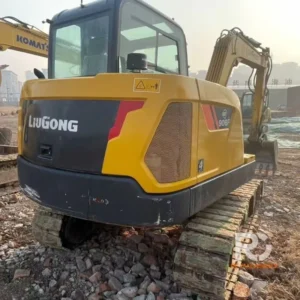 The global push toward net-zero emissions has finally landed squarely on the construction and earthmoving sectors. Starting January 1, 2026, several major economies—including the EU, Canada, the UK, and select states in Australia and the US—will implement or significantly expand carbon taxes specifically targeting non-road mobile machinery (NRMM). For owners of used excavators, this shift is not merely an environmental footnote; it is a direct operational cost driver.
Unlike passenger vehicles, heavy machinery has historically enjoyed a regulatory loophole due to its off-road nature and long service life. The 2026 rules close that gap. Under the new framework, any internal combustion engine above 25 horsepower used in construction, mining, or agriculture will incur a carbon levy based on its certified CO₂ equivalent emissions per hour of operation. For a typical 20-tonne tracked excavator, this could add €18–€35 per operating hour depending on the jurisdiction. The tax applies at the point of fuel purchase or as an annual surcharge based on machine registration and estimated usage hours.
Why target heavy machinery now? Because the sector accounts for roughly 11% of global diesel consumption, yet its decarbonization has lagged behind freight and passenger transport. Regulators argue that without a price signal, fleet owners have little incentive to replace older, dirtier used excavators with electric, hydrogen, or hybrid alternatives. The 2026 carbon tax is designed to accelerate that replacement cycle—but its immediate impact will be felt most acutely by those operating pre-2020 machinery.
Importantly, the tax is not uniform globally. In the EU, the Carbon Border Adjustment Mechanism (CBAM) will extend to NRMM imports, meaning a used excavator shipped from Japan to Poland will face a carbon levy based on its engine’s Stage V compliance status. Canada’s Output-Based Pricing System (OBPS) now includes a specific schedule for heavy machinery, with rates escalating yearly from 2026 to 2030. Even China, while not calling it a carbon tax, has implemented pilot carbon-inclusive equipment registration fees in Shanghai and Guangdong. The message is clear: operating other machinery like wheel loaders, dozers, and graders will soon carry a carbon price tag.
For owners of used excavators, the immediate question is not whether the tax applies—it does—but how to calculate its real-world effect on profit margins. A 2021-model 25-tonne digger consuming 18 litres of diesel per hour emits roughly 48 kg of CO₂. At a proposed rate of CAD $170 per tonne of CO₂ (Canada’s 2026 target), that equals CAD $8.16 per hour. Over a 1,500-hour year, that’s CAD $12,240—a significant line item that didn’t exist two years ago. And because other machinery like articulated dump trucks and skid steers have similar or worse fuel efficiency, the tax compounds across an entire fleet.
But there is nuance. Most jurisdictions include exemptions for low-usage machines (under 200 hours/year), historical vehicles (pre-2000 engines), and fully electric equipment. Furthermore, carbon tax revenue is often partially rebated to companies that can demonstrate fuel efficiency improvements or retrofits. Understanding these exemptions is critical for anyone currently evaluating a used excavator purchase.
2. Direct Financial Impact on Used Excavator Ownership Costs
2.1 Calculating the Per-Hour Surcharge for Pre-Owned Diggers
The most immediate effect of the 2026 carbon tax is a direct increase in the variable operating cost of every diesel-powered used excavator. Unlike new machines, which may come with efficiency-optimized engines or hybrid assists, a typical used excavator from 2015–2019 operates on Tier 4 Final or Stage IV emission standards. While these are cleaner than older models, they still emit approximately 140–220 g/kWh of CO₂ depending on load factor.
To calculate the tax impact, owners need three data points: the machine’s average fuel consumption (litres/hour), the local carbon tax rate per tonne of CO₂, and the annual operating hours. For a used excavator in France under the 2026 carbon tax of €120/tonne CO₂, a 22-tonne machine burning 16 L/hr produces 42.2 kg CO₂/hr. The tax equals €5.06 per hour. Over 1,800 hours, that’s €9,108 annually. Compare this to a 2024-model excavator with the same size but 15% lower fuel burn (13.6 L/hr): tax drops to €4.30/hr, saving €1,368 per year.
But the gap widens for other machinery like older wheel loaders. A 2010-era 5-tonne wheel loader may consume 12 L/hr but operate at lower efficiency, pushing CO₂ per hour to similar levels as a much larger excavator. Because the tax is volume-based, not horsepower-based, a fleet mixing used excavators with older loaders and dozers faces a complex cost allocation problem.
Crucially, the tax applies regardless of whether the machine is working or idling. Idling a used excavator for 30 minutes per day adds roughly 0.75 litres of wasted fuel—and the corresponding carbon tax. Many contractors have historically ignored idle time. Under the 2026 rules, each idle minute has a measurable carbon cost. Telematics systems that track fuel burn and idle percentage will become essential tools for tax management.
2.2 Resale Value Depreciation Linked to Carbon Exposure
Beyond operating costs, the 2026 carbon tax is already reshaping the used excavator resale market. Buyers are beginning to discount machines based on their future carbon liability. A used excavator with high specific fuel consumption (SFC)—say, 220 g/kWh—will command a lower price than an otherwise identical machine with 190 g/kWh, because the buyer anticipates higher carbon tax payments over the remaining service life.
This dynamic creates a two-tier market. Low-hour used excavators from 2018–2022 with documented fuel efficiency will retain value better than high-hour units from 2010–2015. In fact, preliminary data from auction houses in Germany and the Netherlands show that Stage V-compliant used excavators (post-2019) are selling for 12–18% premiums over Stage IV machines, despite similar physical condition. The premium is directly attributable to lower carbon tax exposure.
For sellers, this means the timing of a used excavator sale matters more than ever. A machine sold in late 2025, before full carbon tax enforcement, will fetch a higher price than the same machine offered in early 2026, when buyers have already factored in the tax. For buyers, the opposite is true: purchasing a used excavator after the tax takes effect may mean paying less upfront but incurring higher annual costs. Smart owners will model total cost of ownership (TCO) over 2–3 years, not just purchase price.
Other machinery categories show similar patterns. A 2016 excavator might depreciate an additional 7–9% purely due to carbon tax expectations, while a 2016 motor grader could see 10–12% because graders typically operate at higher average engine loads, increasing CO₂ per hour. The carbon tax does not discriminate by machine type—only by emissions per hour.
2.3 Insurance and Financing Adjustments for Carbon-Intensive Assets
Financial institutions are starting to incorporate carbon risk into heavy machinery lending. Banks in Scandinavia and the Netherlands now ask for CO₂ certification on used excavators before approving equipment loans. Higher-emission machines may face higher interest rates (by 50–150 basis points) or shorter amortization periods. Some lenders have introduced “carbon adjustment factors” that reduce loan-to-value ratios for used excavators with poor fuel economy.
Similarly, insurers are exploring usage-based policies where the carbon tax rate serves as a proxy for operating risk. A used excavator operating in a high-carbon-tax jurisdiction (e.g., British Columbia at CAD $170/tonne) may have higher comprehensive premiums because the insurer assumes the owner will cut corners on maintenance to offset tax costs. While not yet widespread, this practice is expected to grow through 2026–2027.
For owners with mixed fleets containing both used excavators and other machinery like compact track loaders, the financing impact can be uneven. A lender might approve a low-emission excavator at 4.5% interest but require 6.2% for a high-emission wheel loader from the same borrower. This segmentation forces fleet managers to consider carbon efficiency as a financeable asset class.
3. Regional Differences in Carbon Taxation for Heavy Machinery
3.1 European Union: CBAM and Stage V Linkage
The EU’s approach to carbon taxing used excavators is the most aggressive and legally intricate. Under the revised Energy Taxation Directive (ETD) effective January 2026, minimum tax rates on diesel used in NRMM will rise from €0.33/L to €0.45/L for non-road applications. However, the real game-changer is the extension of CBAM to imported used excavators and other machinery like crawler dozers and dump trucks.
Under CBAM, any used excavator entering the EU from a country without an equivalent carbon price must purchase CBAM certificates at a price equal to the EU carbon market (currently ~€95/tonne CO₂). For a 25-tonne used excavator shipped from Japan, the embedded emissions are calculated based on the machine’s estimated lifetime emissions (typically 15,000 hours). This could add €8,000–€12,000 to the import cost of a single used excavator, making intra-EU sales much more attractive.
Furthermore, EU member states retain the right to add their own carbon surcharges. France has announced a “grande taxe carbone” of €25 per hour for any used excavator operating within 500 metres of a protected natural area. Germany is implementing a regional carbon fee for construction machinery used in city centres, starting at €0.08 per kWh of engine output. For a 150 kW excavator, that’s €12 per hour just for the privilege of working in Berlin or Munich.
Compliance requires meticulous record-keeping. Every used excavator in the EU must carry a digital carbon passport showing its certified CO₂ per hour, annual operating hours, and total tax paid. Non-compliance fines start at €5,000 per machine. This administrative burden alone may push small contractors to sell their used excavators and lease newer, pre-certified units instead.
3.2 North America: Canada’s OBPS vs. US Patchwork
Canada leads North America with the most explicit carbon tax on used excavators. The OBPS carbon price will reach CAD $170 per tonne by 2026, applied to all diesel purchased for NRMM. Importantly, Canada’s tax is not refundable for off-road use—unlike some fuel taxes that exempt construction equipment. This means a used excavator working on a remote highway project pays the same carbon rate as a city-based machine.
However, Canada offers a “high-efficiency equipment rebate” of up to 30% of carbon tax paid, provided the used excavator meets specific fuel consumption benchmarks. For a used excavator manufactured after 2015 with telematics-confirmed fuel burn below 190 g/kWh, the rebate is automatic. For other machinery like backhoe loaders, the threshold is 210 g/kWh. This creates a strong incentive to purchase used excavators with verified low fuel consumption.
The United States has no federal carbon tax, but five states—California, Washington, Oregon, New York, and Massachusetts—will implement state-level carbon fees on heavy machinery diesel by mid-2026. California’s Low Carbon Fuel Standard (LCFS) already generates credits, but the new “Construction Equipment Carbon Surcharge” adds $0.12 per litre of diesel for used excavators operating on any project receiving state funding. Given that 70% of California construction involves some state funding, the effect is nearly universal.
Washington’s Climate Commitment Act goes further, capping total emissions from NRMM in the state and requiring owners of used excavators to purchase allowances at auction. A medium-sized excavator using 10,000 litres of diesel annually would need approximately CAD $1,700 in allowances (at current prices). Unlike a simple fuel tax, the cap-and-trade system introduces price volatility—allowance prices could spike to $250/tonne if the market tightens.
3.3 Asia-Pacific Divergence: Australia, Japan, and Singapore
Australia’s carbon tax on used excavators is indirect but potent. While the federal government has not enacted a direct carbon price, the Safeguard Mechanism now applies to construction companies with emissions over 100,000 tonnes CO₂e annually. For a large earthmoving firm operating 50 used excavators, this threshold is easily crossed. Such companies must buy carbon credits from the Clean Energy Regulator, adding an estimated A$4–A$6 per hour to each excavator’s operating cost.
Japan takes a different approach: a carbon levy on used excavators based on engine age. Machines with engines manufactured before 2014 pay ¥350 per kW of rated power annually. A 150 kW excavator thus pays ¥52,500 (approx. US $350) per year regardless of hours used. This favours low-hour used excavators from 2015 onward, which pay only ¥120/kW. The policy has accelerated Japan’s domestic used excavator export market, as older units are sent to Southeast Asia where carbon taxes are lower.
Singapore’s carbon tax applies universally to all diesel at S$25/tonne CO₂, rising to S$45 by 2026. For a used excavator operating on a tight urban site, the effect is modest (S$1.20 per hour), but Singapore’s Real-Time Carbon Monitoring System requires every excavator to transmit fuel consumption data to the National Environment Agency. Privacy-conscious owners have begun preferring other machinery like electric mini-excavators to avoid the surveillance requirement.
4. Operational Adjustments to Mitigate Carbon Tax Exposure
4.1 Retrofitting Used Excavators for Lower Fuel Consumption
Not every owner can afford to replace a used excavator with a new electric or hybrid model. Fortunately, targeted retrofits can reduce fuel consumption—and thus carbon tax liability—by 10–18% on most used excavators. The most cost-effective retrofit is an auxiliary power unit (APU) to handle cab climate control and onboard electronics, eliminating idle time. A used excavator that idles 2 hours per day consumes roughly 5 litres of fuel unnecessarily. At a carbon tax of €120/tonne, eliminating that idle saves €1,100 per year on tax alone, plus another €2,500 in fuel. An APU costs around €3,500 installed, offering payback in under 18 months.
Second, hydraulic system optimizations such as variable-speed cooling fans and load-sensing pumps can improve efficiency. Many used excavators from 2010–2015 have fixed-displacement pumps that waste energy. Aftermarket load-sensing conversions cost €6,000–€9,000 but reduce fuel burn by 8–12%, lowering carbon tax proportionally. For a used excavator working 1,500 hours/year, the tax saving alone is €500–€700 annually, with fuel savings adding €2,000–€3,000. Payback is typically 2.5–3 years.
Third, low-rolling-resistance track systems and tire pressure optimization for other machinery like wheeled excavators and backhoes can cut fuel use by 5–7%. While less dramatic than hydraulic retrofits, these modifications carry lower upfront costs (under €1,500) and can be applied across a mixed fleet of used excavators and other machinery. Importantly, retrofits must be certified by local environmental agencies to qualify for carbon tax rebates. Uncertified modifications may not reduce tax liability, even if they reduce actual emissions.
4.2 Telematics and Carbon Tracking as a Compliance Strategy
Given the complexity of the 2026 carbon tax, passive management is no longer viable. Every owner of used excavators should deploy telematics systems that record engine load, fuel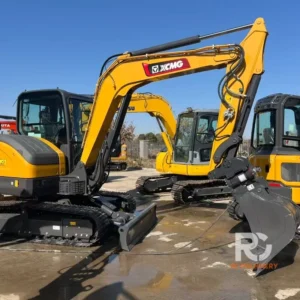 consumption, and idle time with GPS timestamping. The minimum required granularity is per-hour data, but best practice is per-minute logging. Systems like Caterpillar’s Product Link, Komatsu’s Komtrax, or aftermarket solutions from Teletrac Navman can automate carbon tax reporting.
These systems generate two critical outputs: a carbon tax ledger (showing tax due per machine per day) and an efficiency score (comparing the used excavator’s actual CO₂ per hour against its certified baseline). If the used excavator consistently performs above its baseline, the owner may be overpaying tax and can request a recalibration. Conversely, consistent underperformance suggests maintenance issues or operator inefficiency.
For fleets mixing used excavators with other machinery like skid steers and compactors, telematics allows tax allocation to specific projects. A used excavator working on a carbon-sensitive site (e.g., a green building certified under LEED v5) might have its carbon tax treated as a project expense, potentially passing it to the client. Without telematics, the tax is simply an overhead cost, eroding margin.
4.3 Operational Scheduling to Avoid Peak Tax Periods
Some jurisdictions impose time-of-use carbon tax rates. British Columbia, for example, charges 20% higher carbon tax for used excavators operating between 4 PM and 9 PM on weekdays, when grid electricity is carbon-intensive (due to gas peaker plants) and the province aims to disincentivise diesel use. By shifting excavator operations to overnight or weekend shifts, owners can reduce carbon tax by the full 20% without changing equipment or fuel.
Similarly, France’s “pollution peak” system adds a temporary carbon surcharge of €0.08 per litre of diesel on days when particulate matter exceeds thresholds. While unpredictable, these peaks occur roughly 15–20 days per year. Scheduling used excavators for maintenance or low-intensity work on those days avoids the surcharge. For other machinery like concrete pumps that cannot easily reschedule, the surcharge is simply a cost of doing business—but savvy contractors bid it into project quotes.
In Australia, the Safeguard Mechanism’s carbon credit price fluctuates monthly based on auction results. Owners of used excavators can buy credits in months when prices are low (e.g., June and December, historically 15% below average) and apply them to high-emission months. This financial scheduling requires no change to equipment operation but demands cash flow flexibility. A fleet of 20 used excavators might save A$25,000 annually by timing credit purchases.
5. Comparing Carbon Tax Effects Across Machinery Types
5.1 Used Excavators vs. Wheel Loaders: Who Pays More?
While all heavy machinery faces carbon taxation, used excavators often have an advantage over other machinery types due to their duty cycle. A typical used excavator spends 40–50% of its operating time at partial load (digging, swinging, dumping), whereas a wheel loader often operates at near-full throttle during loading cycles. Consequently, a 20-tonne used excavator burning 16 L/hr emits 42 kg CO₂/hr, while a similarly sized wheel loader burning 19 L/hr emits 50 kg CO₂/hr. At a tax of CAD $170/tonne, the excavator pays CAD $7.14/hr, the wheel loader CAD $8.50/hr—19% more.
However, this comparison flips for compact used excavators (under 8 tonnes). Small used excavators often have less efficient engines (higher g/kWh) than their larger counterparts due to simpler fuel systems. A 5-tonne used excavator burning 6 L/hr but with an SFC of 250 g/kWh emits 15.8 kg CO₂/hr—actually higher per unit of work than a 20-tonne machine. Small used excavators thus face a disproportionate carbon tax burden relative to their productivity.
For other machinery like motor graders, the tax impact is even more severe. Graders often operate at high engine loads for grading passes but spend significant time idling between passes. The combination of high peak load and idle waste results in average CO₂ per hour 25–30% higher than a used excavator of similar engine power. Owners with mixed fleets should prioritize grader replacement before used excavator replacement when carbon tax costs are the primary driver.
5.2 Electric and Hybrid Alternatives: The Zero-Tax Option
Machinery powered solely by electricity or hydrogen fuel cells incurs zero carbon tax in all jurisdictions discussed. This makes electric used excavators—though still rare—increasingly attractive. Currently, electric used excavators are available from Volvo CE (ECR25 Electric), Bobcat (E19e), and several Chinese manufacturers. However, their high purchase price (2–3× diesel equivalents) and limited runtime (4–6 hours on a charge) restrict them to niche applications like indoor demolition or urban night work.
Hybrid used excavators (diesel-electric series or parallel) occupy a middle ground. They pay carbon tax on diesel consumption but at a reduced rate due to 20–35% lower fuel burn. For example, a Kobelco SK210HLC-10 hybrid excavator consumes 11.5 L/hr versus 17 L/hr for a conventional used excavator of similar size. At a tax of €120/tonne, the hybrid pays €3.63/hr versus €5.36/hr—a 32% reduction. Over 10,000 hours, that’s €17,300 in tax savings, partially offsetting the hybrid premium.
For other machinery, electric options are emerging more slowly. Electric wheel loaders exist (e.g., Caterpillar 906 Electric) but remain rare in the used excavator market. Electric dozers are virtually nonexistent outside prototypes. Owners of mixed fleets will therefore need to accept carbon tax on certain machine classes while aggressively electrifying those where options exist.
5.3 Age-Based Tax Escalation Clauses
Several jurisdictions have introduced carbon tax multipliers for older used excavators. In the Netherlands, a used excavator manufactured before 2008 pays 2.5× the base carbon tax rate; a 2008–2014 machine pays 1.5×; and post-2014 pays 1.0×. This accelerates the retirement of pre-Tier 4 used excavators. Owners holding very old used excavators (e.g., 2005 models) face carbon taxes that can exceed fuel cost itself—effectively making the machine uneconomical to operate.
Similarly, California’s proposed “Legacy Surcharge” adds $0.30 per litre of diesel for used excavators with engines not certified to Tier 4 Final. For a 2005 excavator burning 18 L/hr, the surcharge adds $5.40/hr to the carbon tax (which itself is $3.20/hr on the base fuel). Total carbon-related cost reaches $8.60/hr, comparable to the machine’s depreciation. At that level, owners typically choose to scrap rather than sell the used excavator, shrinking the supply of affordable pre-owned units.
For other machinery like older asphalt pavers (pre-2010), the age multiplier can be 3.0× due to their exceptionally high emissions per tonne of material laid. Owners of such equipment must either retrofit (often impossible due to engine design) or replace. This creates a secondary market for low-hour used excavators and other machinery from the 2015–2018 era, as buyers seek the oldest machines that still qualify for the lowest age multiplier.
6. Long-Term Strategic Responses for Fleet Owners
6.1 When to Sell Versus Retrofit a Used Excavator
The decision to keep, sell, or retrofit a used excavator under the 2026 carbon tax hinges on three variables: remaining useful life (RUL), retrofit cost, and tax escalation schedule. A simple breakeven formula applies: If (annual tax without retrofit – annual tax with retrofit) × RUL years > retrofit cost, then retrofit. Otherwise, sell.
For a 2014 used excavator with 6,000 hours of expected remaining life (about 4 years at 1,500 hours/year), paying €120/tonne tax, the annual tax is €5,360 (based on 16 L/hr). A €7,000 hydraulic retrofit reducing fuel burn by 10% cuts annual tax to €4,824, saving €536/year. Over 4 years, total saving is €2,144—less than the retrofit cost. Selling this used excavator and buying a more efficient 2019 model makes financial sense.
However, if the same used excavator operates in a jurisdiction with a high age multiplier (e.g., Netherlands’ 1.5× for 2014 models), the math changes. Annual tax becomes €8,040, retrofit saves €804/year, and 4-year saving is €3,216—still below €7,000 retrofit cost. But if the used excavator also qualifies for a carbon rebate (e.g., Canada’s 30% high-efficiency rebate) after retrofit, the effective saving doubles. In that scenario, retrofit becomes attractive.
For other machinery like older wheel loaders with shorter RUL (e.g., 3 years), retrofits rarely pay back. The better strategy is accelerated depreciation: use the used excavator or loader intensively for 12–18 months, then sell it to a buyer in a low-tax jurisdiction (e.g., parts of the US Midwest with no state carbon tax). This “tax arbitrage” strategy requires careful logistics but can preserve value.
6.2 Leasing as a Carbon Risk Transfer Mechanism
Given the uncertainty around future carbon tax rates (most jurisdictions have annual escalation of 5–10% through 2030), many owners are shifting from owning used excavators to leasing. A typical operating lease for a used excavator now includes a clause where the lessor (financing company) pays the carbon tax and bills it back to the lessee as a variable line item. This transfers the risk of future tax increases to the lessee, but also simplifies budgeting.
More innovative leases cap the carbon tax exposure. For example, a 3-year lease on a used excavator might specify a maximum carbon tax of €6.00 per hour, with the lessor absorbing any amount above that. In exchange, the lessee pays a higher base rental (typically 8–12% above market). For owners who cannot predict their annual operating hours accurately, this cap provides insurance against tax spikes.
For fleets with other machinery like telescopic handlers and rollers, leasing becomes even more attractive because those equipment types are often used intermittently. Paying carbon tax only on the hours the machine actually operates (which leasing enables through telemetry) is far cheaper than owning and paying annual carbon registration fees. Many contractors now plan to sell their used excavators and lease replacements, effectively converting a fixed carbon liability into a variable operating expense.
6.3 Diversifying into Carbon-Neutral Site Services
Forward-thinking owners are repositioning their used excavator fleets as “carbon-neutral site services” rather than simply earthmoving providers. This involves bundling carbon tax payments into a higher daily rate but also offering clients verified emission reductions. For example, an owner might operate a used excavator that emits 50 tonnes CO₂ per year, pay €6,000 in carbon tax, then purchase €6,000 worth of verified carbon offsets (e.g., forestry credits) and retire them on behalf of the client. The client gets a “carbon-neutral excavation” certificate, often worth more in green building certification points than the added cost.
This strategy works best for used excavators operating on projects with sustainability mandates—LEED, BREEAM, or Infrastructure Sustainability (IS) rating schemes. A single used excavator can generate €8,000–€12,000 of additional revenue per year through carbon service bundling, more than offsetting the tax itself. For other machinery like compaction rollers used on road projects, similar bundling applies.
However, owners must ensure the offsets are high-quality (e.g., Gold Standard or Verra certified) and that the carbon tax is still paid—bundling does not avoid the tax, it adds a premium service on top. The strategy also requires transparent reporting, which telematics-enabled used excavators can provide. Owners without telematics cannot credibly offer carbon-neutral claims.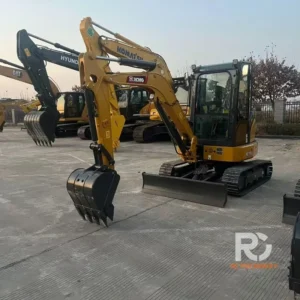
7. Practical Checklist for Used Excavator Owners Facing 2026
As the 2026 carbon tax implementation date approaches, every owner of used excavators should complete the following actions:
-
Audit your fleet’s fuel consumption baseline. Run each used excavator through a standardized duty cycle (e.g., 1 hour of mixed digging and truck loading) and record litres burned. Compare against the manufacturer’s specification. If actual consumption exceeds spec by more than 10%, investigate maintenance issues before the tax takes effect.
-
Calculate your carbon tax exposure per machine per year. Use local 2026 tax rates (published by mid-2025 for most jurisdictions) and your actual or estimated annual hours. For other machinery in the fleet, repeat the calculation separately—tax rates may differ by machine category.
-
Identify retrofit opportunities. Prioritize used excavators with over 3 years of remaining life and fuel consumption above 200 g/kWh. Get quotes for APU installation, hydraulic pump upgrades, and telematics retrofits. Rank by payback period under the new tax regime.
-
Review financing and insurance terms. Ask your lender if they will apply a carbon adjustment factor to your used excavator loans. If yes, consider refinancing before January 2026. Request carbon tax riders from your insurer.
-
Update your job costing and quoting templates. Add a line item for “carbon compliance” calculated as (estimated hours × local tax rate). For projects extending beyond 2026, include an escalation factor of 5–10% per year. Clients are increasingly willing to pay separately for carbon costs if presented transparently.
-
**Decide on a sell/keep/lease strategy for each used excavator. Use the breakeven formula in section 6.1. For used excavators you plan to sell, list them by September 2025 to avoid the post-tax price drop. For machines you keep, order retrofit parts early—demand will spike in late 2025.
-
Register for any available carbon tax rebates or exemptions. Many jurisdictions require pre-approval for high-efficiency equipment rebates. Submit applications at least 90 days before the tax effective date. Keep digital copies of engine certifications and telematics data.
-
Train operators on idle reduction and efficient techniques. A skilled operator can reduce fuel consumption on a used excavator by 8–12% through techniques like minimizing swing angle, avoiding high-engine-speed digging, and using auto-idle features. Tie operator bonuses to fuel efficiency metrics.
-
Explore carbon credit purchasing programs. If you operate in a cap-and-trade jurisdiction (e.g., Washington state), open a compliance account with the relevant agency. Learn the auction schedule and budget for credit purchases. For smaller fleets, consider joining a cooperative purchasing group to access better pricing.
-
Monitor legislative updates monthly. Carbon tax rules are evolving rapidly. Subscribe to alerts from your national environment agency and industry associations. What is true for used excavators in January 2026 may change by July.
8. Future Outlook Beyond 2026
The 2026 carbon tax on heavy machinery is not a one-time adjustment but the beginning of a long-term decarbonization pathway. By 2028, most experts expect carbon tax rates to double from their 2026 levels, reaching €240/tonne in the EU and CAD $340/tonne in Canada. At those levels, a used excavator burning 16 L/hr would pay over €18 per hour in carbon tax alone—more than the machine’s fuel cost and approaching its hourly depreciation.
This trajectory will fundamentally change the used excavator market. Pre-2020 machines will become nearly unsellable in high-tax jurisdictions, forcing them into low-tax regions (e.g., parts of Africa, South America) or the scrap yard. The used excavator of 2030 will likely be a fully electric or hydrogen-powered machine, with diesel used excavators confined to very remote or backup roles. Owners who plan for this transition now—by investing in telematics, retrofits, and operator training—will weather the 2026 tax with minimal disruption. Those who ignore it will find their used excavators transformed from profit centers into carbon cost centers.
For other machinery like dozers, loaders, and graders, the same forces apply, though electric alternatives lag by 3–5 years. Owners of mixed fleets should prioritize replacing the highest-emission machines first, regardless of age. A 2018 used excavator with excellent fuel economy may be worth keeping, while a 2020 wheel loader with poor SFC should be sold. The carbon tax does not reward newness—it rewards efficiency.
Finally, note that the carbon tax interacts with other emerging regulations: low-emission zones in cities, noise ordinances favoring electric used excavators, and sustainability reporting requirements for public contracts. Owners who view the tax as an isolated cost will miss the larger strategic picture. The 2026 carbon tax is a signal that the era of cheap diesel for heavy machinery is over. Adapt or exit.