





In the world of heavy machinery, few things are as frustrating as a machine that refuses to start or behaves erratically right after a rainstorm. You turn the key in the ignition of a reliable workhorse, and instead of the healthy roar of hydraulics and combustion, you are greeted by a flickering dashboard, dancing needles on the gauges, and a starter motor that clicks erratically. For operators and owners of used excavators, this scenario is a common yet often misunderstood phenomenon.
The instinctive reaction is often to blame the battery, the alternator, or even the starter motor. However, in the vast majority of cases involving intermittent electrical failures following precipitation, the root cause is not a failed component but a simple, insidious one: a single corroded or moisture-laden connector. In the heavy equipment industry, particularly when dealing with other machinery like wheel loaders, bulldozers, and skid steers, the vulnerability of low-voltage electrical systems to environmental exposure is often underestimated.
This article provides a comprehensive guide to understanding, identifying, and rectifying the “phantom” electrical issues caused by moisture ingress. We will conduct a full-scale “post-rain” electrical (troubleshooting), focusing on the fact that high-impedance connections—not dead components—are usually the culprits behind diagnostic trouble codes and erratic behavior. By adhering to a systematic approach, you can save thousands of dollars in unnecessary parts replacement and maximize the uptime of your fleet.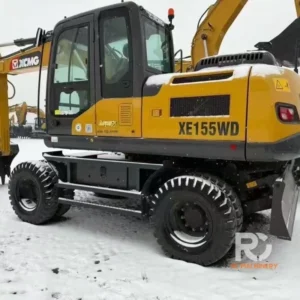
1. The Science of the Short: Understanding High Resistance
Before diving into the physical inspection, it is crucial to understand why water wreaks havoc on the electrical architecture of modern used excavators and other machinery. Unlike a direct short circuit where a wire touches bare metal causing a fuse to blow instantly, moisture creates a “high-resistance” path.
1.1 The Role of Galvanic Corrosion
When water—especially water mixed with road salts, urea, or mineral dust—seeps into a sealed (or unsealed) connector, it acts as an electrolyte. If the connector pins are made of dissimilar metals (such as copper pins with tin-plated sockets), a small battery is formed. This process, known as galvanic corrosion, slowly eats away at the conductive surfaces.
Over time, this corrosion reduces the cross-sectional area available for current to flow. When you turn the key, the Engine Control Unit (ECU) or the Body Control Module (BCM) requests a high current flow to engage the starter solenoid. If the connector linking the ignition switch to the starter relay has a resistance of even 10 ohms due to moisture, the voltage drop across that connector becomes significant. The ECU sees this as a “low voltage” condition and responds by shutting down non-essential systems—hence the flickering dashboard and random warning lights.
1.2 Signal vs. Power Circuits
In the realm of excavator diagnostics, one must distinguish between power circuits (high current) and signal circuits (low current). Signal circuits, such as those from the hydraulic pressure sensors, throttle position sensors, or CAN bus (Controller Area Network) communication lines, are particularly sensitive. A signal line expecting a 5-volt reference might receive only 3.8 volts due to moisture-induced resistance. The ECU interprets this out-of-spec reading not as a wiring fault, but as a mechanical failure. Consequently, the machine may enter “limp mode,” limiting hydraulic flow and engine RPM, even though the mechanical components are perfectly healthy.
2. Systematic Diagnosis: The Post-Rain Protocol
When facing a machine that malfunctioned immediately following a storm, a systematic approach is required. Do not start by throwing parts at the machine. Instead, follow this tiered diagnostic protocol designed for the harsh environments typical of used excavators.
2.1 Initial Assessment: Identifying the Affected Network
The first step is to determine which electrical network is compromised. Using a high-quality multimeter, begin at the battery. However, unlike a traditional diagnostic sequence, you must perform this test under load.
Many technicians make the mistake of checking static battery voltage (12.6V) and assuming the battery is healthy. Instead, you must activate the suspected circuit. If the dashboard flickers when turning the key, hold the key in the “start” position while probing the battery terminals.
-
Voltage Drop Test: If the battery voltage drops below 9.6V during cranking, the battery is suspect. However, if the voltage remains above 10.5V but the dashboard continues to flicker erratically, you have a connection problem elsewhere.
-
Ground Integrity: In other machinery like excavators, the chassis ground is the return path for all circuits. Moisture collects at the main ground strap connection points (usually from the battery negative to the frame, and from the frame to the engine block). A single corroded ground stud can cause the current to seek alternative paths, often back-feeding through sensor grounds and causing the dashboard to behave like a slot machine.
2.2 Locating the “Hidden” Connectors
The most difficult aspect of repairing intermittent electrical faults is locating the connector that is actually wet. In used excavators, manufacturers place central junction boxes and main harness connectors in locations that are theoretically protected but practically vulnerable. Common locations include:
-
Under the cab floor mats (subject to footwell flooding)
-
Behind the rear wall of the cab (exposed to roof leaks)
-
Inside the left-hand console (where operators often spill liquids)
-
The main bulkhead connector passing through the firewall
The key here is to look for “water trails.” Dust accumulating on a wire bundle often creates a path for water to wick into the connector through capillary action. Even connectors with rubber seals (Deutsch connectors) can fail if the seal is pinched or if the backshell is cracked.
3. Component-Level Inspection: The Connector Breakdown
To effectively address the issue, one must become intimately familiar with the architecture of the machine’s wiring. This section focuses on the granular inspection of connectors, a critical skill for maintaining the reliability of used excavators.
3.1 Visual and Tactile Inspection Techniques
Visual inspection is the first line of defense, but it must be thorough. Remove the connector in question. Look for “green crust”—the hallmark of copper oxide corrosion. However, corrosion isn’t always visible immediately upon opening the connector.
The Tactile Test: A connector that has been compromised by moisture often exhibits “pin drag” issues. When you separate the connector halves, the pins should feel tight. If they slide apart with no resistance, the female terminals have lost their spring tension. This tension loss is often accelerated by the heat generated from high-resistance moisture paths. Loose pins create micro-arcing, which carbonizes the plastic housing and further exacerbates the resistance.
Furthermore, inspect the wire side of the connector. If the insulation is soft or spongy, it indicates that moisture has wicked up the wire strands, traveling away from the connector body. In such cases, cutting back the wire and re-pinning the connector is the only permanent solution.
3.2 Dielectric Grease: Friend or Foe?
There is a significant debate in the heavy equipment industry regarding the use of dielectric grease in connectors. For other machinery operating in wet conditions, the application of dielectric grease is a double-edged sword.
When applied correctly—only on the rubber seals and the back of the connector—it creates a hydrophobic barrier that prevents moisture ingress. However, when applied directly to the metal pins and sockets, it can cause issues. While dielectric grease is non-conductive, if applied excessively, it can physically prevent the pins from making full metal-to-metal contact. For low-voltage signal circuits (such as those found in modern excavator CAN bus systems), even a thin film of grease acting as an insulator can cause signal attenuation.
The Best Practice: If you discover a wet connector, clean it thoroughly with electrical contact cleaner (preferably one that leaves no residue). Allow it to dry completely (compressed air helps). Then, apply a small amount of dielectric grease to the seal only, not the pins, before reassembling.
4. Advanced Diagnostics: Active Testing
 Once the visual inspection is complete, the diagnostic process moves to active testing. This is where we differentiate between a simple moisture event and a chronic wiring failure.
4.1 Using a Thermal Camera or Thermal Gun
One of the most effective tools for finding a wet or corroded connector is a thermal imaging camera. After operating the machine for 10 to 15 minutes, shut it down and immediately scan the wire harnesses and fuse boxes.
-
Theory: A corroded or wet connector introduces resistance. Resistance generates heat.
-
Application: If a specific connector or relay is significantly hotter than the surrounding components, that is your point of failure. For used excavators that have been sitting on a lot exposed to the elements, this method is non-invasive and highly accurate. You don’t need to disturb the wiring to find the fault; you simply follow the heat signature.
4.2 The Wiggle Test with a Multimeter
For intermittent issues that occur only during vibration (such as when the machine drives over a bump after a rain), the “wiggle test” is essential.
-
Connect a multimeter set to measure ohms (resistance) across the suspect circuit.
-
With the machine off, wiggle the wire harness near the connectors that were exposed to water.
-
If the resistance jumps from 0.0 ohms (good) to anything above 5 ohms, you have found a loose or corroded connection.
-
Repeat this process for the ground circuits.
This test is particularly relevant for other machinery that relies heavily on PWM (Pulse Width Modulation) sensors. A wet connector on a PWM sensor can cause the sensor to send erratic signals, which the ECU interprets as a catastrophic failure, locking out hydraulic functions.
5. Preventative Maintenance Strategies
Addressing moisture ingress after it happens is reactive. For fleet owners and owner-operators, developing a preventative maintenance (PM) strategy to combat electrical moisture intrusion is far more cost-effective than downtime.
5.1 Harness Taping and Routing
The way a wire harness is routed dictates its susceptibility to water damage. In used excavators, original equipment manufacturers (OEMs) often route harnesses with “drip loops.” A drip loop is a U-shaped bend in the harness before it enters a connector. This ensures that water traveling down the harness drips off the bottom of the loop rather than flowing directly into the connector.
When performing maintenance or repairs:
-
Never route a harness so that the connector faces upward. Water will pool in the connector cavity.
-
Use high-quality, self-fusing silicone tape rather than standard electrical tape for wrapping harnesses. Silicone tape bonds to itself, creating a waterproof seal that does not leave adhesive residue that traps moisture.
-
For critical ECU connectors, consider using a “conformal coating” spray. This is a specialized polymer coating that protects circuit boards and connector backshells from moisture and dust without impeding future serviceability.
5.2 Fuse Box and Relay Center Hygiene
The central junction box (fuse box) is often the epicenter of moisture-related chaos. In other machinery, these boxes are frequently located in the cab near the operator’s feet, making them vulnerable to water ingress from boots or cleaning processes.
-
Inspection: Open the fuse box and check the bottom of the relays. If you see white oxidation on the relay prongs, moisture has been present.
-
Solution: Remove all relays and fuses. Clean the terminals with a small wire brush or contact cleaner. Apply a thin layer of silicone dielectric grease to the base of the relay sockets (not the prongs) to prevent future water intrusion. Replacing the fuse box lid gasket is a cheap investment compared to the cost of chasing a short that only appears when it rains.
6. Addressing the CAN Bus and Network Issues
Modern heavy machinery relies on the Controller Area Network (CAN) bus to communicate between various ECUs. The CAN bus uses twisted-pair wires (CAN High and CAN Low). These wires are highly sensitive to resistance changes.
6.1 Termination Resistors and Moisture
A common issue in used excavators that have undergone repairs is the corruption of the CAN bus due to moisture in the termination resistor connectors. The CAN bus requires a 120-ohm termination resistor at both ends of the network. If moisture corrodes the pins of the connector housing these resistors, the network impedance fluctuates.
-
Symptoms: The machine may start and idle fine but will stall or lose hydraulic functions when any control is touched. The display may show “Communication Error” or “Network Error.”
-
Diagnosis: With the machine off, disconnect the CAN bus connectors and measure the resistance across pins 1 and 2 (or the designated CAN pair). You should read approximately 60 ohms (representing the two 120-ohm resistors in parallel). If you read open line (infinite resistance) or a high, unstable value, you have a corroded connection somewhere in that loop.
6.2 Software Re-flashing: The Last Resort
Often, after a moisture event, an ECU stores “hard codes” (permanent fault codes) even after the physical moisture has been removed. This is because the ECU detected a voltage inconsistency and locked out certain functions as a safety protocol.
In these scenarios, simply drying the connector is not enough. The ECU must be cleared using diagnostic software (such as JCB ServiceMaster, Caterpillar ET, or Komatsu Komtrax). If you are purchasing used excavators from auction, it is wise to perform a full electronic system check and software update to ensure that previous moisture events have not left latent software locks in place.
7. Cost-Benefit Analysis of Professional vs. DIY Repair
When facing electrical gremlins, owners must decide whether to invest in professional diagnostic tools or attempt a DIY repair. Given the complexity of modern excavator electronics, the scale often tips toward professional intervention, but not always.
7.1 The Cost of Component Swapping
A common pitfall in the industry is “component swapping.” A mechanic suspects the starter is bad because the dash flickers. They install a new starter ($500–$1,200). The problem persists. Next, they replace the alternator ($800). Still, the machine won’t start. Finally, they replace the main control unit ($3,000–$5,000) only to discover that the issue was a $15 relay socket corroded by a leaking cab roof.
This scenario is alarmingly common in other machinery sectors where diagnostic time is undervalued. The cost of a high-end multimeter, a thermal camera, and a factory wiring diagram is often less than the cost of one unneeded ECU.
7.2 When to Call a Specialist
If you are dealing with a machine that uses Tier 4 Final emissions technology, the electrical systems are interwoven with aftertreatment controls. Moisture in a DEF (Diesel Exhaust Fluid) quality sensor connector can shut down the entire machine.
-
Specialty Tools: Specialists use breakout boxes and oscilloscopes to view the actual waveform of the signals traveling through the wires. An oscilloscope can show you if a signal is “noisy” (distorted by moisture-induced interference) in a way that a multimeter cannot.
-
Time Efficiency: For fleet managers, the downtime of a used excavator sitting in the shop for three days while a technician traces a harness is often more expensive than the repair itself. Hiring a mobile heavy equipment electrician who specializes in excavator electronics can reduce diagnostic time from days to hours.
8. Long-Term Reliability Strategies
To ensure that a post-rain electrical failure does not become a recurring nightmare, implementing long-term reliability strategies is essential.
8.1 Sealing Aftermarket Modifications
One of the leading causes of moisture ingress in used excavators is aftermarket modifications. Adding lighting packages, GPS systems, or security systems requires tapping into the factory harness. If these taps are not sealed with heat-shrink tubing (with internal adhesive), they act as wicking points for moisture.
When purchasing used excavators, carefully inspect the wiring for “scotch locks” or “vampire taps.” These are quick-splice connectors that pierce the wire insulation. They are a death sentence for electrical reliability in wet environments. If you find them, remove them, cut out the damaged section of wire, and solder the connection, sealing it with marine-grade heat shrink.
8.2 Documentation and Labeling
For maintenance teams working on other machinery, documentation is a force multiplier. When you discover a specific connector that is prone to moisture (e.g., the main ECM connector on a particular model of excavator), label it clearly with a tag that says “Check for Moisture – PM Required.”
Creating a “Known Issues” binder for your fleet allows operators and technicians to preemptively inspect known trouble spots before the rainy season begins. This proactive approach aligns with the best practices of the excavator industry, moving maintenance from reactive to predictive.
Conclusion
The phenomenon of a dashboard flickering wildly and a machine refusing to start after a rainstorm is rarely a sign of catastrophic mechanical failure. In the vast majority of cases, especially with used excavators and other machinery that have endured years of exposure, the culprit is a single, moisture-laden connector or a corroded ground point.
By shifting the diagnostic focus from component replacement to systematic electrical testing—including voltage drop tests, thermal imaging, and meticulous connector inspections—owners can resolve these issues with minimal expenditure. The key takeaway is that water creates resistance, and resistance confuses the sophisticated electronic control systems that govern modern heavy machinery.
A disciplined approach to preventative maintenance, such as ensuring proper harness routing, sealing connectors, and maintaining the integrity of fuse boxes, will significantly reduce the incidence of these frustrating failures. In the competitive landscape of heavy equipment operation, uptime is the ultimate metric of success. Understanding that the difference between a fully operational machine and a “dead” one often lies in the cleanliness of a single electrical terminal empowers operators and owners to take control of their fleet’s reliability.
Next time you turn the key on a damp morning and are greeted by a chaotic display of warning lights, resist the urge to order a new starter or ECU. Instead, grab your multimeter, start tracing the ground circuits, and open the connectors one by one. More often than not, you will find that a little bit of moisture, a small patch of corrosion, and a loose pin were the only things standing between you and a full day of productive work.