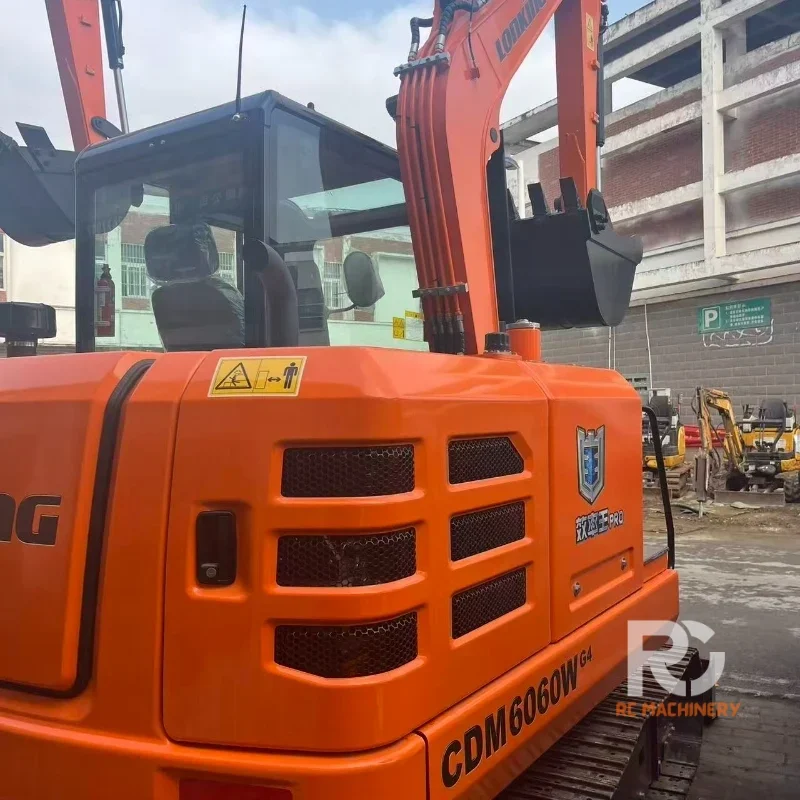






When machinery leaves a factory or a resale lot, it carries with it a promise of performance. For manufacturers and exporters, the journey of a machine does not end at the port of departure; it begins anew at the port of arrival. In the world of heavy equipment, few environments are as punishing as the tropics. High humidity, saline-laden air, and extreme temperature fluctuations create a perfect storm for corrosion.
For businesses dealing in used excavators, the difference between a satisfied repeat customer and a logistical nightmare often comes down to a substance that is barely visible to the naked eye: paint. However, this is not just any paint. The industry standard for protecting assets destined for equatorial regions has shifted toward a specification that sounds excessive to the uninitiated—marine-grade coating. Why would a piece of earthmoving equipment, designed to dig dirt, require the same protective layer as a naval vessel battling the open ocean?
This article delves into the chemistry, economics, and engineering behind this standard. We will explore why standard industrial enamel fails in the tropics, how marine-grade coatings function on a molecular level, and why this application is critical not only for new stock but especially for used excavators and other machinery that have already been compromised by previous wear. Understanding this secret is essential for any exporter looking to maintain asset value, reduce warranty claims, and establish credibility in harsh markets.
Exporting heavy machinery to tropical regions such as Southeast Asia, West Africa, or Northern Australia involves a supply chain that spans thousands of miles. Equipment is often shipped via open-top containers or roll-on/roll-off vessels, exposed to salt spray for weeks. Upon arrival, the machines face ambient humidity levels that often exceed 80% year-round.
For dealers specializing in used excavators, the risk is twofold. First, the existing paint film on a used machine is rarely intact. Scratches, chips from site debris, and undercarriage wear expose bare metal. Second, the perceived value of the machine is heavily influenced by its cosmetic condition. In many tropical markets, a machine that shows signs of “red rust” (ferric oxide) is viewed as mechanically unsound, regardless of its engine hours. Consequently, the application of a high-performance coating is not merely an aesthetic choice; it is a critical risk management strategy.
2. The Chemistry of Corrosion: Why the Tropics Are Different
To understand why standard coatings fail, we must first understand the enemy. Corrosion is an electrochemical process. In temperate climates, the oxidation of iron occurs at a predictable, slow rate. However, in tropical climates, the variables that accelerate this reaction are amplified.
The primary accelerant is electrolyte activity. For rust to form, a metal surface requires an electrolyte—a liquid that conducts electricity. In the tropics, this electrolyte is omnipresent. High humidity creates thin films of moisture on metal surfaces. In coastal tropical regions, this moisture contains dissolved chlorides (salt). Chlorides are aggressive because they break down the passive oxide layer that naturally forms on steel, creating pits that act as anodes for further corrosion.
Furthermore, the combination of ultraviolet (UV) radiation and heat accelerates polymer degradation. Standard industrial paints rely on a resin matrix. When exposed to tropical UV levels, this matrix breaks down (chalking), becoming porous. Once porous, moisture penetrates to the metal surface, and under-film corrosion begins. For exporters of other machinery—such as agricultural tractors, generators, or port equipment—this delamination can occur within months of arrival if only standard coatings are used.
2.1 The Electrolyte Trap in Used Equipment
When dealing with used excavators, the corrosion risk is exacerbated by the presence of “crevice corrosion.” Used machines have hundreds of overlapping plates, bolt joints, and hydraulic fitting interfaces. During previous operation, mud and debris accumulate in these crevices. If this debris contains hygroscopic salts (salts that attract water), they will retain moisture against the steel long after the external surfaces appear dry.
Standard spray paints do not have the “edge retention” or flexibility to seal these crevices. Conversely, marine-grade coatings are formulated with high-build properties. They are designed to form a thick barrier that bridges gaps and resists the wicking action of moisture. Without this barrier, a used excavator shipped to a humid port city can develop structural corrosion in the undercarriage carriage and counterweight within the first rainy season.
3. Defining the Standard: What Makes a Coating “Marine-Grade”?
The term “marine-grade” is often thrown around casually, but in the context of industrial coatings, it refers to a specific set of performance standards. These coatings are typically defined by their adherence to international standards such as ISO 12944 (which classifies corrosive environments) and ASTM D4587 (for weathering resistance).
Marine-grade coatings are usually two-part systems: a high-solids epoxy primer combined with a polyurethane topcoat. The epoxy primer provides adhesion and cathodic protection. It is loaded with corrosion-inhibiting pigments, such as zinc phosphate or, in extreme cases, metallic zinc (zinc-rich primers). These pigments sacrifice themselves electrochemically to protect the steel substrate—the same principle used to protect ship hulls.
The polyurethane topcoat serves as the UV barrier. Unlike alkyd enamels (the standard oil-based paint found on many factory machines), polyurethane retains its elasticity. It expands and contracts with the steel substrate without cracking. For machinery like used excavators that experience vibration and flexing during operation, this elasticity is vital to prevent the coating from fracturing at weld seams.
Another distinguishing factor is the “dry film thickness” (DFT). A standard industrial spray job on construction equipment often results in a DFT of 40 to 60 microns. Marine-grade specifications typically require a DFT of 160 to 200 microns for the primer alone, with a total system thickness exceeding 250 microns.
This thickness serves a dual purpose. First, it creates a physical barrier that is impermeable to oxygen and water vapor. Second, it provides “sacrificial thickness” for abrasion. Used excavators and outras máquinas often undergo additional handling during export—lifting, chaining, and container loading. A thin coating will be breached by a chain link; a thick, marine-grade coating will resist that abrasion.
4. Economic Rationale: Calculating the Cost of Corrosion
There is a common misconception that applying marine-grade coatings is an unnecessary expense that inflates the cost of goods sold. However, the economics of exporting heavy machinery to the tropics suggest the opposite: it is a cost-avoidance strategy.
The direct costs of corrosion include warranty repairs, part replacement, and devaluation. For a high-value asset like a used excavator, the appearance of structural rust can devalue the asset by 15–25% in the eyes of a buyer. If an exporter ships a machine with standard paint that fails within six months, they face not only the repair cost (sandblasting and repainting in the field, which is 3–4 times more expensive than doing it at origin) but also the loss of future business due to reputation damage.
Furthermore, the logistics of rework in tropical markets are complex. Finding qualified applicators with proper environmental controls (spray booths) is difficult. Often, field repairs involve brushing on generic enamel over rust, leading to “flash rusting” beneath the new layer. By investing in marine-grade coatings at the point of export, businesses eliminate the risk of these expensive, reputation-damaging field failures.
4.1 Asset Lifecycle Extension
For used excavators specifically, the extension of asset life is a key selling point. A machine that is protected against corrosion maintains its structural integrity longer. Corrosion doesn’t just look bad; it weakens the boom, arm, and chassis. In the tropics, corrosion fatigue is a leading cause of structural failure in older machines.
By applying a marine-grade system, dealers can market the machine as “tropicalized”—a term that commands a premium. Buyers in these regions are sophisticated; they understand that a machine with proper corrosion protection will have a lower total cost of ownership. They are willing to pay a higher upfront price for a used excavator that has been treated to marine standards because they know they will not face downtime for weld repairs or rust remediation.
5. Application Methodologies: From Shop Floor to Container
Achieving true marine-grade protection requires more than just buying expensive paint. The application process is where the “secret” either succeeds or fails. The three pillars of a successful coating system are surface preparation, primer application, and topcoat finishing.
For outras máquinas—such as wheel loaders, forklifts, or stationary industrial units—the geometry of the equipment dictates the preparation method. Flat surfaces are easy; complex castings and hydraulic reservoirs are difficult.
5.1 Surface Preparation: The SSPC Standards
The Society for Protective Coatings (SSPC) defines standards for surface preparation. For marine-grade protection on used equipment, the minimum standard is SSPC-SP6 (Commercial Blast Cleaning). This involves abrasive blasting (grit or shot) to remove all rust, mill scale, and existing loose paint, leaving the surface with a 1.5 to 2.5 mil anchor profile.
This anchor profile is critical. It provides mechanical adhesion for the epoxy primer. Without this profile, even the best marine-grade coating will lose adhesion when subjected to tropical humidity cycling. For used excavators, this step often requires extensive masking of hydraulic cylinders, engine compartments, and precision-machined surfaces. It is labor-intensive, but it is non-negotiable for a durable result.
5.2 The “Wet-on-Wet” Technique
To save time and ensure chemical bonding, many marine coating applicators utilize a “wet-on-wet” technique for the primer and intermediate coats. Epoxy primers often have a recoat window—typically 24 hours at 25°C. If the topcoat is applied after this window but before the epoxy is fully cured, the chemical bond is compromised, leading to intercoat delamination.
In tropical export preparation, timing is crucial. Facilities must schedule blasting and coating cycles to ensure that the full system—primer, intermediate, and polyurethane topcoat—is applied within the specified recoat intervals. This discipline ensures that the coating acts as a monolithic shield rather than a series of poorly bonded layers.
6. The Vulnerability of Used Excavators: A Closer Look
New machinery leaves factories with factory-applied coatings that, while often not marine-grade, are at least uniform. Used excavators, however, present a unique set of challenges for coating applicators. These machines have operational histories that include impacts, abrasion, and contamination.
One of the most critical areas is the undercarriage. The track frame, rollers, and idlers are subjected to constant stone impact. When exporting used excavators to tropical regions, the undercarriage is often the first area to show catastrophic rust. Standard coatings chip immediately. Marine-grade coatings, particularly those formulated with aluminum flake or polyurethane elastomers, offer “impact resistance.”
Additionally, the hydraulic tank and fuel tank surfaces often exhibit “poultice corrosion” on used machines. This occurs where old mud and organic material have sat against the steel for months, creating a differential aeration cell (oxygen concentration cell). Simply washing the machine and painting over it with standard paint traps these chlorides against the steel. Marine-grade protocols require high-pressure washing followed by blast cleaning to remove these embedded salts, a step that is often skipped in standard “detail and paint” operations.
6.1 Welds and Heat-Affected Zones
Welds are the most corrosion-prone areas on any piece of heavy machinery. The heat-affected zone (HAZ) of a weld has a different crystalline structure than the parent metal. It is often anodic to the base metal, meaning it will corrode preferentially.
For outras máquinas like cranes or port equipment, weld corrosion can lead to catastrophic failure. Marine-grade epoxies are formulated with “edge retention” properties. They do not pull back from sharp edges (like weld toes) during curing. This ensures that the HAZ remains sealed. In contrast, standard industrial enamels shrink upon curing, pulling away from sharp weld toes and exposing the vulnerable steel to the tropical atmosphere.
7. UV Resistance and Color Stability in Tropical Climates
Beyond rust prevention, the aesthetic longevity of the coating is a commercial concern. In markets where used excavators are sold based on “appearance hours,” a faded, chalky machine is assumed to be older or poorly maintained.
Marine-grade polyurethane topcoats utilize aliphatic isocyanates. Unlike aromatic polyurethanes or alkyds, aliphatic formulations do not yellow or chalk significantly when exposed to UV radiation. They maintain gloss and color integrity for years, even under the intense sun of the equator.
For exporters shipping other machinery—such as agricultural harvesters that sit in open fields—color stability is a branding issue. A green tractor that fades to pink or a yellow excavator that turns chalky white reflects poorly on the original equipment manufacturer (OEM) and the seller. Marine-grade coatings lock in the color, preserving the machine’s marketability long after it has left the showroom floor.
7.1 Infrared Reflectance
An advanced aspect of marine-grade coatings for tropical environments is the use of Infrared (IR) reflective pigments. Because these coatings are applied thick, they can absorb significant solar heat. In standard dark colors (like the yellow or black commonly used on excavators), heat absorption can raise surface temperatures to over 80°C (176°F). This heat accelerates the breakdown of the coating and causes operator discomfort (hot cabs).
High-quality marine-grade systems offer IR reflective variants. These pigments reflect near-infrared radiation, keeping the surface temperature of the used excavator up to 20°C cooler. This reduces thermal stress on the coating, prolonging its life and improving operator safety in tropical conditions.
8. Logistics of Export: Shipping Environment
The benefit of marine-grade coatings becomes apparent even before the machine arrives at the customer’s site. The shipping environment itself is a proving ground.
Machines shipped in open-top containers or on flat racks are exposed to saltwater spray, especially in heavy seas. If a standard coating is used, chlorides will penetrate microscopic pinholes in the film, leading to “osmotic blistering” during the voyage. These blisters form under the paint, creating bubbles that pop upon arrival, revealing orange rust.
Marine-grade coatings are designed with high electrical resistance (high impedance). They prevent the flow of electrons that drive corrosion. Furthermore, they exhibit “cathodic disbondment resistance.” If a scratch does occur during loading, the marine-grade primer will prevent the corrosion from spreading laterally beneath the paint film, limiting the damage to a pinpoint area. This is critical for used excavators that may have old repair welds or scratches from previous site work.
8.1 Condensation During Transit
“Container rain” is a phenomenon where humidity inside a sealed container condenses on the steel surfaces due to temperature swings (the diurnal cycle). This condensation is pure, oxygenated water—an ideal electrolyte.
If used excavators are placed in high-cube containers with standard paint, condensation will run down the boom and arm, pooling in the bucket cylinder recesses and causing “racing stripes” of rust. A marine-grade coating system, with its hydrophobic topcoat, encourages water to bead and run off without penetrating the film. This ensures that when the container doors open in a tropical port, the machine looks exactly as it did when it was loaded.
9. Environmental Compliance and VOC Regulations
An often-overlooked aspect of marine-grade coatings is their compliance with environmental regulations, particularly Volatile Organic Compound (VOC) limits. In many transshipment hubs (e.g., Singapore, Rotterdam), strict VOC regulations govern what coatings can be applied or stored.
Modern marine-grade coatings are often “high solids” or “solvent-free.” They contain fewer VOCs than standard industrial alkyds. For businesses preparing used excavators and outras máquinas for export, using these compliant coatings ensures smoother logistics through transshipment ports and reduces liability regarding environmental fines.
Additionally, the longevity of marine-grade coatings aligns with sustainability goals. A single application that lasts for the remaining life of the machine eliminates the need for repeated repaints, which would generate hazardous waste (blasting media, paint sludge) multiple times. Exporters who adopt this standard can market their operations as environmentally conscious, a value proposition that resonates with European and North American buyers purchasing equipment for tropical projects.
10. Implementation Strategy for Exporters
Transitioning from standard paint to a marine-grade specification requires a shift in operational protocol. It is not simply a matter of buying different cans of spray paint. It requires vendor qualification, quality control, and customer education.
10.1 Vendor Qualification
Not every paint shop is equipped to handle marine-grade materials. These coatings require plural-component spray equipment (proportioners) to mix the two-part epoxies accurately. Shops must also have climate control; epoxy cannot be applied when humidity exceeds 85% or when steel temperatures are below the dew point. Exporters must audit their suppliers to ensure they have the proper equipment (airless spray pumps, dehumidifiers, and blasting equipment) to execute the SSPC-SP6 standard.
10.2 Quality Control Documentation
To justify the premium price of a “marine-grade protected” used excavator, exporters should provide documentation. This includes:
-
Inspection reports: Blast profile readings (using replica tape).
-
DFT readings: Dry film thickness measurements taken at 20-30 points on the machine, proving the 250-micron standard was met.
-
Coating logs: Batch numbers and mix ratios to ensure traceability.
This documentation builds trust with buyers. When a customer in a tropical country sees that a machine was blasted to a white metal finish and coated to a specific DFT, they understand they are purchasing a premium asset.
10.3 Marketing the Difference
For keywords like “used excavators” and “other machinery,” the inclusion of “marine-grade corrosion protection” in the product description acts as a powerful differentiator. In online marketplaces, listings that specify “tropicalized” or “marine-grade coated” see higher click-through rates from buyers in coastal and high-humidity regions. It signals to the buyer that the seller understands the local environment and has taken proactive steps to ensure the machine’s reliability.
Conclusion: An Investment in Reputation
The secret behind protecting heavy machinery in the tropics is not much of a secret to those who understand material science; it is a discipline of using the right tools for the environment. The decision to utilize marine-grade coatings is a decision to respect the chemistry of the tropics. It acknowledges that the standard factory finish—designed for temperate climates and short-term storage—is insufficient for the rigors of equatorial humidity, saline atmospheres, and the logistical gauntlet of international shipping.
For businesses dealing in used excavators, this standard is particularly critical. Used equipment carries the scars of its past life. Without a high-build, flexible, and chemically resistant barrier, these scars become initiation points for rapid corrosion. Similarly, for exporters of outras máquinas—whether agricultural, industrial, or construction—the application of a marine-grade system is the most cost-effective insurance policy against warranty claims and asset devaluation.
Ultimately, the application of marine-grade anti-corrosive coatings transcends mere aesthetics. It is about engineering reliability. It ensures that a machine arriving at a job site in Jakarta, Lagos, or Panama is ready to work immediately, without the looming threat of structural degradation. In a competitive global market, where buyers have choices, the exporter who understands this secret—and invests in the meticulous process of surface preparation and high-performance coating—will build a reputation for quality that withstands the harshest elements on earth. By prioritizing this level of protection, the industry can move beyond the perception of heavy equipment as disposable commodities and towards a model of durable, sustainable assets that perform reliably regardless of the latitude.