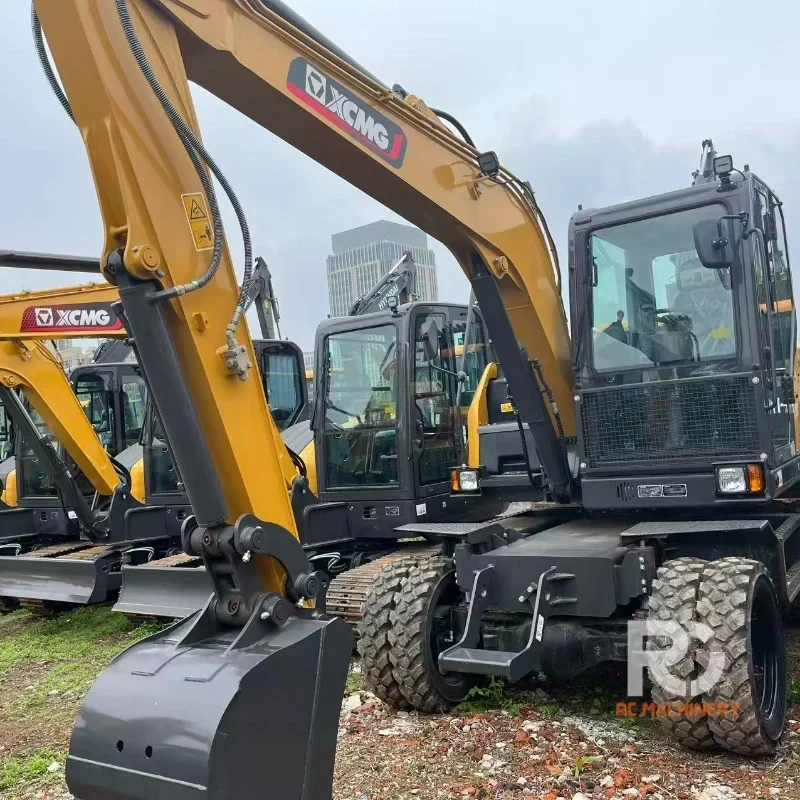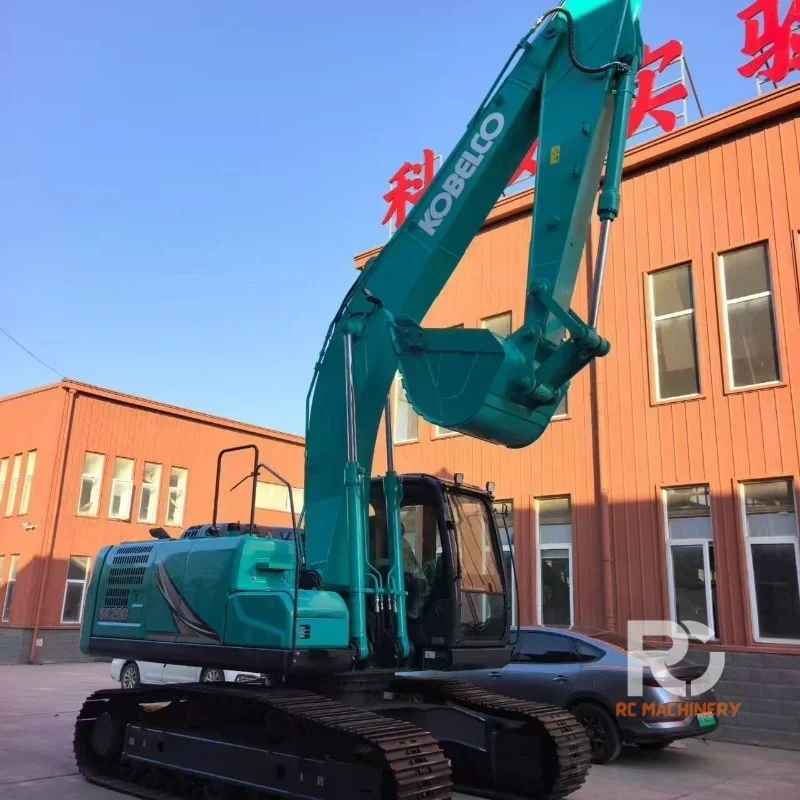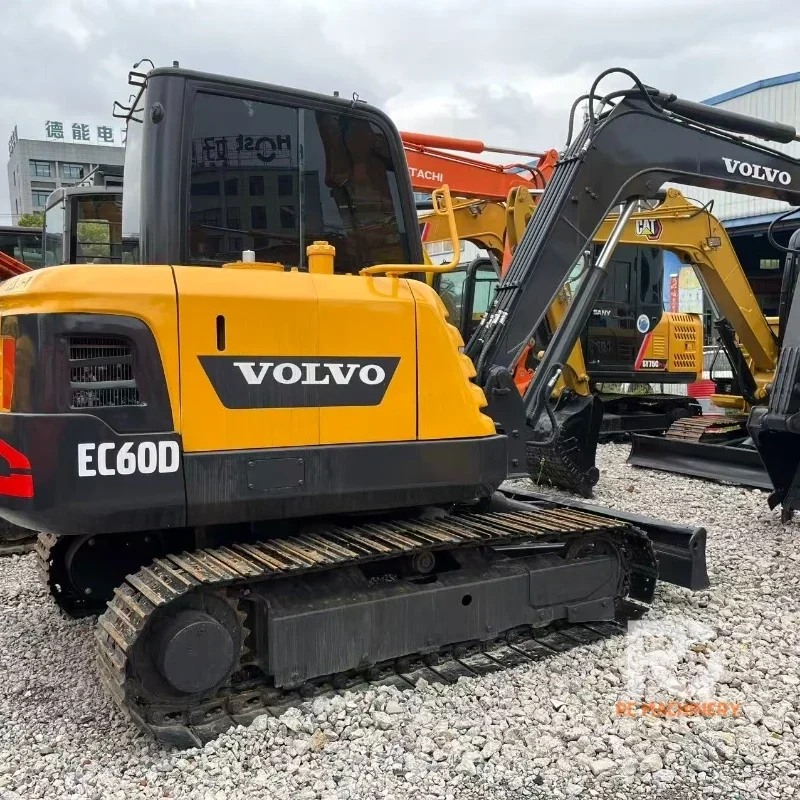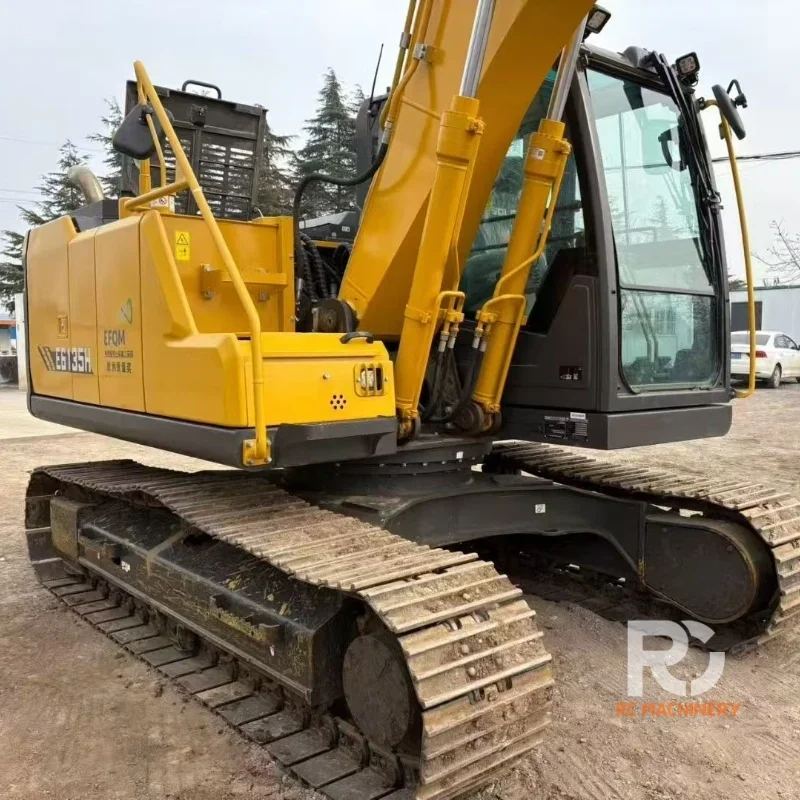






 The global trade of heavy machinery represents a significant economic engine. From the sprawling construction sites of Southeast Asia to the agricultural hubs of South America, the demand for reliable equipment drives a constant flow of containers, flat racks, and Roll-on/Roll-off (RoRo) vessels across the world’s oceans. Within this trade, used excavators and other machinery constitute a substantial portion of the cargo. While purchasing pre-owned assets offers undeniable financial advantages for buyers and sellers alike, the logistics of transporting them introduce a complex web of risks. Among these, physical damage—specifically collision—remains one of the most prevalent and financially devastating perils.
Unlike new equipment shipped in pristine factory crates, used excavators often travel with exposed components, weathered seals, and varying degrees of existing wear. This makes them particularly vulnerable during the rigors of ocean transit. When a vessel encounters heavy seas, or when a container is mishandled during terminal operations, the resulting collision forces can render a multi-ton excavator a total loss or necessitate repairs that erase any profit margin from the sale.
For stakeholders—including exporters, importers, freight forwarders, and logistics managers—the question is not if a collision might occur, but how to prepare for it. Marine cargo insurance is the primary instrument for this risk mitigation. However, simply purchasing a policy is insufficient. To truly safeguard assets, one must understand the nuances of coverage, the specific vulnerabilities of heavy machinery, and the strategies to ensure that a claim for collision damage is honored swiftly and fully. This article explores the anatomy of collision risk in the maritime transport of used excavators and other machinery, and provides a technical roadmap for leveraging marine insurance to achieve absolute protection.
1. Understanding the Vulnerability of Used Machinery During Transit
To effectively insure against collision risks, one must first understand why used excavators and other machinery are so susceptible to this specific peril. The maritime environment is inherently hostile, characterized by constant motion, dynamic forces, and a high-density environment where cargo is packed tightly together.
1.1 The Physics of Transit: Dynamic Forces
During ocean voyages, vessels experience six degrees of motion: heave, sway, surge, roll, pitch, and yaw. For cargo, the most destructive of these are rolling and pitching. Even in moderate sea states, a container vessel can experience accelerations of up to 0.5g laterally. For a 20-ton used excavator inadequately secured inside a flat rack container, this force translates into tens of thousands of pounds of lateral pressure.
If the lashing points are compromised, or if wooden dunnage shifts due to moisture absorption or vibration, the excavator can slide. This sliding motion inevitably leads to impact against the container’s steel walls, adjacent cargo, or structural pillars. For loose machinery stowed in a vessel’s hold or on deck (RoRo), the risk of collision with other units is magnified exponentially.
1.2 Structural Weaknesses in Pre-Owned Assets
New machinery typically leaves the factory with standardized lashing points and a factory-preserved finish. Used excavators, however, often have unknown histories. The undercarriage may have worn tie-down points; hydraulic lines may be exposed; and the center of gravity may have shifted due to after-market attachments.
When such a unit collides with another piece of other machinery—such as a used bulldozer or wheel loader—during a storm, the damage is rarely superficial. Common collision damages include:
-
Cracked engine blocks from impact with adjacent cargo.
-
Boom and arm deformation from shifting against container walls.
-
Punctured hydraulic tanks leading to environmental contamination and total fluid loss.
-
Damaged electrical harnesses crushed between the cab and a neighboring unit.
2. Decoding Marine Insurance: The Core Perils
Marine cargo insurance is governed by a set of standardized clauses, most notably the Institute Cargo Clauses (A, B, and C). Understanding these clauses is the foundation of any strategy to mitigate collision risk.
2.1 Institute Cargo Clauses: A, B, and C
The level of coverage dictates the insurer’s liability for collision damage.
-
Clause C (Restricted Coverage): This is the most basic coverage. It generally covers major casualties like fire, explosion, stranding, sinking, or collision of the vessel. However, it does not cover damage caused by the shifting of cargo or contact with other cargo unless the vessel itself collides with something external. For collision between used excavators stowed next to each other, Clause C is typically insufficient.
-
Clause B (Intermediate Coverage): This expands coverage to include “washing overboard” and “entry of sea, lake, or river water into the vessel.” Crucially, it also covers “total loss of any package lost overboard or dropped whilst loading.” However, it still often excludes damage caused by simple shifting or contact between cargo unless caused by a vessel casualty.
-
Clause A (All-Risks Coverage): This is the gold standard for protecting used excavators and other machinery. Clause A covers all risks of physical loss or damage from any external cause, subject to specific exclusions (inherent vice, willful misconduct, etc.). Collision, regardless of whether it is caused by vessel motion, improper stowage, or heavy weather, is generally covered under this clause, provided the damage is fortuitous and external.
For heavy machinery exporters, selecting Clause A is the primary non-negotiable step. It shifts the burden of proof away from the insured (who must prove the collision was a covered peril) to the insurer (who must prove a specific exclusion applies).
2.2 Navigating Exclusions: Inherent Vice and Improper Packing
Even with Clause A, insurers scrutinize claims involving used excavators for two critical exclusions: Inherent Vice and Improper Packing.
-
Inherent Vice: This refers to defects within the machinery itself. If a collision causes a hydraulic line to rupture, but the adjuster finds that the line was rusted to the point of imminent failure prior to transit, they may argue that the loss was due to inherent vice (the pre-existing condition) rather than the collision.
-
Improper Packing (or Insufficient Packaging): This is the most common defense against collision claims. If an excavator is shipped with inadequate lashing, insufficient dunnage, or without proper blocking, the insurer can deny the claim. They will argue that if the machinery had been properly secured for the intended voyage, the collision forces would not have caused damage.
3. The Synergy Between Packing Protocols and Insurance
Insurance does not exist in a vacuum. For a claim involving collision damage to be successful, the shipping and packing process must be executed in a manner that renders the “Improper Packing” exclusion inapplicable. This is the operational nexus of risk mitigation.
3.1 The Role of Certified Surveyors
Prior to shipment, engaging a certified cargo surveying company is a cost-effective investment. These professionals draft a Pre-Shipment Condition Report and a Packing Certificate. This document serves three purposes:
-
It establishes the pre-existing condition of the used excavator, documenting existing dents, scratches, or rust. This defeats potential “inherent vice” arguments by clarifying what damage existed before the voyage.
-
It certifies that the lashing and securing methods meet the standards required by the International Maritime Organization (IMO) and the specific vessel’s stowage plan.
-
It provides photographic evidence that the excavator was properly braced to withstand the G-forces expected on the route.
When a collision occurs, the first document the insurer requests is the survey report. A professional certification is often the difference between a paid claim and a repudiated one.
3.2 Securing for Different Transport Modes
Collision risks vary by transport mode, and insurance coverage must align with the entire logistics chain.
-
Containerized (Flat Racks): For used excavators shipped on flat racks, the risk of collision is with the container structure or adjacent cargo. Insurers expect to see certified lashing bars, welded stoppers (if allowed by the container owner), and steel banding.
-
Roll-on/Roll-off (RoRo): In RoRo shipping, other machinery is driven onto the vessel and lashed to the deck. The collision risk here is two-fold: collision during loading/unloading (where operators may misjudge distances) and collision during heavy weather (where multiple units shift en masse). RoRo requires specialized “sea-fastening” techniques. Insurance policies must be reviewed to ensure they cover the unique “on-deck” exposure, as some standard policies exclude deck cargo unless specifically declared.
4. Strategic Policy Placement: Beyond the Standard Form
While the Institute Cargo Clauses provide the baseline, customizing the policy to the specific nuances of heavy machinery transport is essential for robust collision protection.
4.1 Agreed Value vs. Market Value Policies
A critical distinction in marine insurance for used excavators is the valuation basis.
-
Market Value: Standard policies often settle claims based on the market value at the time and place of loss. If the excavator market has declined between the time of purchase and the time of the collision, the payout may be significantly less than the invoice value.
-
Agreed Value: This is a strategic upgrade. An Agreed Value policy stipulates that in the event of a total loss (such as one caused by a catastrophic collision that renders the machinery a constructive total loss), the insurer will pay a pre-determined sum. For exporters financing high-value used excavators, this ensures that the loan or investment is fully covered, regardless of market fluctuations. For collision damage that is repairable, the policy should also specify that repairs be based on “replacement with new” or “reasonable repair costs” without depreciation.
4.2 The Role of the Survey Clause
Most marine policies contain a “Survey Clause” that requires the insured to notify the insurer immediately upon discovery of damage and to allow a survey before any repairs are undertaken. In the context of collision damage to other machinery, this is a potential pitfall if not managed correctly.
When a collision occurs—for instance, a used excavator sustains a cracked counterweight after being struck by a shifting wheel loader—the immediate instinct is to offload the cargo and fix it to mitigate demurrage charges. However, if repairs commence before the insurer’s surveyor has inspected the damage, the insurer may void the claim, arguing they were deprived of the opportunity to assess causation (i.e., whether the crack was from the collision or pre-existing).
Therefore, a sophisticated risk mitigation strategy includes a clear logistics protocol: upon any indication of collision (e.g., broken lashing, visible new damage), the consignee must stop all operations, document the scene with photos and videos, and contact the insurance claims department for a survey appointment before any cargo is moved or repaired.
5. Documentation: The Pillar of a Successful Collision Claim
In the event of a collision, the ability to prove what happened rests entirely on documentation. A claim that lacks supporting documents is, from an insurer’s perspective, a claim that lacks merit.
5.1 The Packing List and Commercial Invoice
These foundational documents establish the value of the used excavator or other machinery. Discrepancies here are a common source of underinsurance, which leads to the application of “average” (a proportional reduction in payout). If a $100,000 excavator is declared at $70,000 to save on premium, the insurer will only pay 70% of any collision damage claim.
5.2 The Bill of Lading and Its Clauses
The Bill of Lading (B/L) serves as the contract of carriage. Clean B/Ls (those without notations of damage or insufficient packing) are critical. If the carrier notes that the used excavator was received with “rusty, loose lashing” or “damaged undercarriage” on the B/L, the marine insurer will use this to deny a subsequent collision claim, arguing the machinery was not in a seaworthy condition at the start of the voyage.
5.3 Photographic Evidence
A chronological photographic record is the most compelling evidence in collision disputes. This should include:
-
Pre-shipment: Close-ups of all existing damage, serial numbers, and the packing process.
-
Stowage: Wide shots showing the excavator in relation to adjacent other machinery and the vessel’s structure.
-
Post-damage: Immediately upon discovery, photos showing the lashing state (if broken) and the specific collision points (e.g., a fresh gouge in the boom that matches the corner of a neighboring unit).
6. Handling the Aftermath: Post-Collision Protocols
When the worst-case scenario occurs—a vessel encounters a storm, and upon discharge, the used excavators show signs of severe collision—a pre-planned response protocol minimizes financial loss.
6.1 Mitigation of Loss
The insurance contract contains an implied duty for the assured to mitigate loss. After a collision, leaving a damaged excavator in a port terminal for weeks accruing storage fees is a breach of this duty. The insured must take reasonable steps to minimize the loss, such as moving the machinery to a secure warehouse for survey. However, these steps must be coordinated with the insurer to avoid voiding coverage.
6.2 Constructive Total Loss (CTL) Considerations
In severe collisions, the cost of repairing a used excavator may exceed its insured value. This is a Constructive Total Loss. In such cases, the insurer has the option to pay the agreed value and take ownership of the wreckage (salvage). The strategic consideration here is salvage value. If the collision has rendered the excavator a total loss, but the engine and hydraulics remain salvageable, the insured must negotiate with the insurer regarding who retains the salvage rights. Experienced shippers often negotiate policies that allow them to retain salvage in exchange for a reduced payout, allowing them to recoup value through parts sales.
7. Enhancing Coverage for High-Value Shipments
For high-value shipments, where a single used excavator might be valued at $200,000 or more, the standard marine policy may require additional enhancements to fully cover collision risk.
7.1 Institute Cargo Clauses (A) with War and Strikes
While not directly related to weather-induced collision, political instability in certain regions increases the risk of handling damage. In ports where labor strikes occur, the risk of cargo being mishandled—and colliding with cranes or other containers—rises. Adding War and Strikes coverage ensures that if a collision occurs during a labor disruption or as a result of war risk perils (like terrorist acts at a port), the coverage remains intact.
7.2 Delay in Start-Up (DSU) or Advanced Loss of Profits
For buyers who purchase other machinery for a specific project, a collision that damages the equipment in transit doesn’t just incur repair costs; it incurs opportunity cost. If the excavator is delayed by three months for repairs after a collision, the contractor may lose a contract or face penalties. Advanced DSU insurance covers these consequential losses, providing a financial safety net that extends beyond the physical damage to the asset itself.
8. Common Pitfalls and How to Avoid Them
Even experienced exporters fall into traps that compromise their coverage against collision risks. Awareness of these pitfalls is crucial for maintaining full protection.
8.1 The “Open Cover” Gap
Many exporters operate under an “Open Cover” marine policy, which automatically declares shipments. A common gap is failing to declare the specific nature of the cargo. If the open cover is designed for general goods but is used to ship a used excavator, the insurer may later argue that the rate and terms were not calculated for the unique risks of heavy machinery. It is essential to ensure that the open cover schedule explicitly lists used excavators and other machinery to avoid a misrepresentation claim.
8.2 Assuming Carrier Liability Covers the Risk
A persistent myth is that the ocean carrier’s insurance will cover collision damage. In reality, the carrier’s liability is governed by international conventions (like the Hague-Visby Rules), which limit liability to a very small amount per package (often around $500 per package) unless a higher value is declared and additional freight paid. For a $50,000 excavator, relying on carrier liability for collision damage is akin to having no insurance at all.
8.3 Inconsistent Valuation
If a shipment comprises multiple units of used excavators and other machinery on a single bill of lading, declaring a single lump sum value can lead to problems. If only one unit is damaged in a collision, the insurer may apply the “average” across the total declared value. To avoid this, each individual unit should be declared with its own distinct value on the insurance declaration.
9. The Future of Risk Mitigation: Technology and Data
The intersection of technology and marine insurance is providing new tools to mitigate and document collision risks for used excavators.
9.1 IoT and Shock Sensors
Affordable Internet of Things (IoT) shock sensors can now be affixed to used excavators during transit. These sensors record the maximum G-forces experienced during the voyage, along with temperature and humidity. If a sensor records a G-force spike that exceeds the lashing design threshold, it provides objective proof that a collision event occurred, even if the damage is not visible externally. Insurers are increasingly receptive to claims supported by such data, as it eliminates ambiguity regarding cause.
9.2 Blockchain for Documentation
The fragmentation of documentation (survey reports, bills of lading, insurance certificates) is a major bottleneck in claim settlement. Blockchain-based platforms allow all stakeholders—shipper, forwarder, insurer, surveyor—to access immutable, time-stamped documents. When a collision occurs, the claims adjuster can instantly verify the pre-shipment condition survey and the packing certification, accelerating the approval process and reducing the likelihood of disputes over documentation integrity.
Conclusion: Building a Holistic Risk Management Framework
Protecting used excavators and other machinery from the financial consequences of collision damage during ocean transit is not a matter of purchasing a single policy. It is a holistic risk management framework that integrates technical packing, rigorous documentation, and strategic insurance placement.
The journey of a used excavator from a seller’s yard in one continent to a buyer’s project site in another is fraught with mechanical vulnerabilities. The maritime environment, with its unpredictable forces and tight stowage constraints, guarantees that collision risk is not a hypothetical—it is an inherent aspect of the logistics chain.
For stakeholders to navigate this environment successfully, the strategy must be layered:
-
Operationally: Employ certified surveyors to oversee packing and lashing, ensuring that the defense of “improper packing” is rendered invalid before the vessel even departs.
-
Contractually: Secure Institute Cargo Clauses (A) coverage with Agreed Value to eliminate disputes over valuation and ensure full indemnity for collision-related total losses.
-
Procedurally: Establish a clear claims protocol that prioritizes immediate notification, preservation of evidence, and mitigation of loss without compromising the insurer’s right to survey.
-
Technologically: Leverage IoT sensors and unified digital documentation to provide irrefutable evidence of both pre-shipment condition and the occurrence of collision events.
Ultimately, the goal of marine cargo insurance in the context of used excavators is to ensure that a collision—whether caused by heavy weather, improper stowage, or mishandling—becomes a logistical inconvenience rather than a financial catastrophe. By shifting the focus from passive insurance purchase to active risk mitigation, exporters, importers, and logistics professionals can secure their assets, protect their margins, and ensure that their other machinery arrives at its destination ready for work, not destined for the scrap yard.
The sea will always present risks, but with a sophisticated understanding of marine insurance mechanics and a disciplined approach to packing and documentation, the collision risk that haunts the heavy machinery trade can be effectively neutralized, allowing global commerce to flow with confidence and security.