






1. The Challenge of the Gray Zone
When a hydraulic line bursts on a remote jobsite—miles from the nearest dealership and outside the manufacturer’s designated service territory—the clock becomes the most expensive asset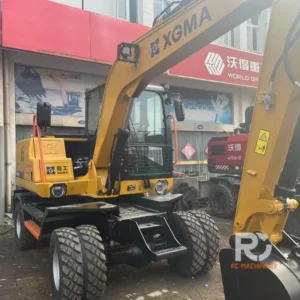 on the site. For operators and fleet managers working with used excavators or mixed fleets, the reliance on “genuine” parts often becomes a logistical impossibility. The reality of global construction is that machinery works where infrastructure is being built, not necessarily where dealerships exist.
In these scenarios, the ability to source universal generic or interchangeable components is not merely a cost-saving measure; it is a prerequisite for operational survival. However, navigating the world of aftermarket and universal parts requires a fundamental shift in mindset. Unlike ordering a sealed box with a manufacturer’s logo, sourcing universal components demands a deep understanding of hydraulic architecture, thread pitch identification, and the subtle variations in metallurgy that separate a reliable fix from a catastrophic failure.
This guide is designed for mechanics, fleet owners, and project managers operating in regions without factory support. We will explore how to safely cross-reference components, identify high-quality Other machinery parts that fit your primary asset, and establish supply chains that keep dirt moving regardless of the brand name on the side of the machine.
2. Understanding the Universal Parts Ecosystem
Before diving into specific components, it is crucial to understand why universal parts exist and how they differ from Original Equipment Manufacturer (OEM) offerings. The heavy equipment industry relies heavily on what are known as “captive suppliers.” A major excavator manufacturer rarely forges their own hydraulic cylinders or machines their own pins and bushings. Instead, they contract with specialized manufacturers—like Kayaba, Rexroth, or Nachi for hydraulics, or Isuzu, Mitsubishi, or Cummins for engines.
A universal part is typically a component manufactured by the original sub-supplier but sold without the branding of the heavy equipment manufacturer. In other cases, it is a high-quality aftermarket component designed to meet or exceed the original specifications (OEM specs) without the associated dealership markup and shipping restrictions.
For fleets operating used excavators, this ecosystem is a lifeline. A machine that has been out of production for ten years often has a discontinued OEM parts line. However, because the underlying technology (such as a standard hydraulic pump or swing motor) was used across dozens of models and brands, the universal variant remains readily available. The key is to decouple the visual branding of the machine from the actual engineering standards of the component you need.
3. Mastering the Hydraulic Interface
Hydraulics are the nervous system and muscles of any excavator. They are also the most common source of failure in remote environments, primarily due to contamination or seal degradation. When sourcing universal hydraulic components, one cannot rely on model numbers alone.
3.1. The Language of Threads and Fittings
The most common pitfall when replacing hydraulic hoses or fittings in the field is thread mismatch. An OEM part may use a proprietary thread to force customers back to the dealership. Universal suppliers, however, operate on industry standards.
When sourcing hoses or adapters for used excavators, the technician must first identify the thread type. The four primary standards encountered are:
-
JIC (Joint Industry Council): Characterized by a 37-degree flare seat. This is the most common standard in universal hydraulics.
-
ORFS (O-Ring Face Seal): Used extensively by American and European manufacturers for high-vibration applications to prevent leaks.
-
BSPP (British Standard Pipe Parallel): Common in Japanese and European machinery. Often confused with JIC but utilizes a 60-degree cone or o-ring boss.
-
NPT (National Pipe Tapered): Generally found on older or North American auxiliary systems.
A universal parts kit for remote areas must include a digital caliper and a thread pitch gauge. By measuring the diameter and threads per inch (or millimeter pitch), a technician can cross-reference the failed OEM component with a universal standard. Suppliers specializing in Other machinery components often provide conversion adapters that allow an OEM proprietary port to interface with a universally available JIC hose, effectively bypassing the need for a dealership-specific part.
3.2. Universal Cylinder Seals and Packs
Hydraulic cylinders are robust, but seals degrade over time. While the barrel and rod might be specific to a model, the sealing components are largely standardized based on the rod diameter and bore size.
When rebuilding cylinders on site, sourcing a “universal seal kit” is a viable strategy. Instead of ordering a kit by the excavator model number, which may be obsolete or unavailable, the technician should remove the cylinder, disassemble it, and measure the dimensions of the grooves in the piston and gland. Using a cross-reference guide from major seal manufacturers (like Parker or Hallite), one can assemble a kit based on dimensional data rather than machine serial numbers. This approach is particularly effective for older used excavators where the original seals are no longer in production.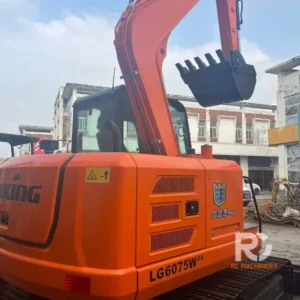
4. The Undercarriage: Wear Parts Without Borders
The undercarriage—comprising tracks, rollers, idlers, and sprockets—is one of the highest wear areas on any machine. It is also one of the most standardized areas for universal components.
4.1. Track Groups and Pitch Compatibility
The industry has largely coalesced around standard track pitches. The pitch (the distance between the center of two track pins) dictates compatibility. For example, a 203mm (8-inch) pitch is extremely common across 20-to-30-ton excavators, regardless of whether the machine is a Caterpillar, Komatsu, Hitachi, or Volvo.
When searching for universal undercarriage parts for used excavators, the focus should be on the “track group.” A track group consists of the chains (left and right) and the track shoes. Many aftermarket manufacturers produce “generic” track groups that fit a range of models. The critical factor is the “link height,” which determines wear life, and the bushing diameter.
For Other machinery in the fleet, such as skid steers or compact track loaders, the same principle applies. A universal rubber track for a compact excavator often fits multiple brands because the frame widths and sprocket drives are manufactured by a single supplier (like Berco or ITR) and rebranded. By identifying the track pitch and number of links, rather than the machine brand, the operator opens up a global marketplace of interchangeable parts.
4.2. Rollers and Idlers
Bottom rollers and top carriers are often the first undercarriage components to fail due to seal failure. Fortunately, these are highly standardized. A bottom roller is defined by its bolt pattern, flange type (single or double), and diameter.
In remote areas, the solution is often to purchase “loose rollers” from a universal supplier that stocks components by dimensions. It is common to find that a bottom roller listed for a specific Deere model has identical dimensions to one listed for a Kobelco model. By maintaining a stock of dimensionally standard rollers—rather than model-specific ones—a remote fleet can reduce inventory costs and increase versatility across Other machinery assets.
5. Engine Systems: Beyond the Badge
The engine bay is often a sanctuary of standardization. While the excavator manufacturer applies their own paint and decals, the engine is typically a mass-produced unit from a specialist manufacturer.
5.1. Filters: The Low-Hanging Fruit
Oil, fuel, air, and hydraulic filters are the most commonly replaced maintenance items. They are also the easiest to source universally, yet they remain a frequent source of cross-contamination errors.
The universal approach to filtration is to bypass the machine model number entirely and use the filter manufacturer’s interchange system. Brands like Donaldson, Baldwin, and WIX have extensive catalogs that allow a technician to cross a Caterpillar, Komatsu, or Hitachi part number to a universal spin-on or cartridge filter.
However, caution is required with fuel systems, particularly on high-pressure common rail engines used in modern used excavators. Using a filter with the correct thread and diameter but the incorrect micron rating (e.g., using a 40-micron primary filter where a 10-micron secondary is required) can lead to injector failure. Universal does not mean “one size fits all” in filtration; it means using an equivalent standard that meets the ISO cleanliness code required by the engine manufacturer.
5.2. Cooling Systems
Radiators, oil coolers, and charge air coolers often fail due to physical damage (sticks or debris) or corrosion. OEM radiators are often priced prohibitively and have long lead times. Universal cooling solutions are readily available.
In the excavator segment, universal aluminum radiators and hydraulic oil coolers can be installed by using universal mounting brackets and modifying the rubber isolators. The key metrics are the core dimensions, inlet/outlet sizes, and the BTU (British Thermal Unit) dissipation capacity. A reputable radiator shop or industrial cooling supplier can often match the thermal requirements of the engine and hydraulic system using a generic core that is wider or taller than the original, provided the physical space in the engine bay allows for it. This modification is standard practice in regions where factory cooling packs are unattainable.
6. The Electrical Workaround
Modern excavators rely heavily on sensors, switches, and electronic control modules (ECMs). This is the most challenging area for universal parts, as electronics are often locked to the manufacturer’s software. However, there are universal workarounds for non-critical systems.
6.1. Sensors and Switches
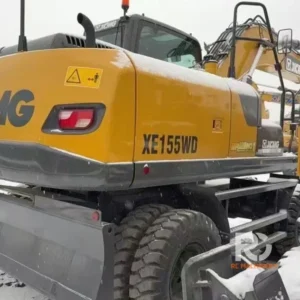 While engine control sensors (like crank position or camshaft sensors) are often proprietary to the engine manufacturer and are best sourced by the engine serial number rather than the excavator model, many other sensors are standardized.
Hydraulic pressure sensors, temperature senders, and limit switches for travel levers often operate on a 0-5V or 4-20mA output standard. By identifying the voltage range and thread size (often 1/8” or 1/4” BSPP), a universal industrial pressure sensor can be wired into the circuit. This requires a technician who understands wiring diagrams, but it bypasses the need for a software-locked “dealer only” part.
For used excavators being utilized in non-critical roles (such as material handling rather than precision grading), the loss of the “auto idle” function or the “fuel level gauge” does not render the machine inoperable. In these scenarios, sourcing universal analog gauges from automotive or industrial supply stores to replace proprietary, failed displays is a cost-effective and rapid solution.
7. Structural Components: Pins, Bushings, and Wear Plates
The articulation points of an excavator—the boom, arm, and bucket linkages—are subject to immense shearing forces. Wear in these areas leads to sloppy operation and accelerated component failure.
7.1. Standardizing Pin Diameters
When working with a mixed fleet of Other machinery and excavators, standardizing pin diameters for attachments can drastically reduce downtime. Many fleet managers in remote areas will modify the ears of their buckets or quick couplers to accept a standard pin diameter (such as 60mm, 70mm, or 80mm) across all machines.
When the factory pins wear out, universal “hardened pins” can be sourced from industrial bearing suppliers or specialty fastener companies. These are often made from 4140 or 4340 chromoly steel, heat-treated to a specific Rockwell hardness (usually 50-55 HRC for surface hardness, with a ductile core). By ordering pins by length and diameter, rather than by machine serial number, the operator can create a stocked inventory that services the entire fleet.
7.2. Bushings
Bronze bushings are another high-wear area. While OEM bushings are often designed with a specific oil groove pattern, universal “sleeve bearings” can be machined to fit. In remote settings, a small lathe is an invaluable tool. Technicians can purchase stock lengths of centrifugally cast bronze tubing and machine them to the precise outer diameter (OD) to fit the lug, and inner diameter (ID) to match the universal pin.
This approach ensures that the excavator remains operational without waiting weeks for a pre-manufactured bushing kit. The cost of machining a bushing is often a fraction of the cost of an OEM bushing, and the material quality (if using SAE 660 bronze) is often superior to the sintered or rolled materials used in some factory components.
8. Establishing a Remote Supply Chain
Sourcing the part is only half the battle; logistics is the other half. In areas without dealer coverage, the supply chain must be proactive rather than reactive.
8.1. Leveraging Multi-Brand Distributors
Instead of relying on single-brand dealerships, establish relationships with industrial distributors who carry lines like Other machinery components. These distributors often stock:
-
Hydraulic hose and fittings (Parker, Gates)
-
Bearings and seals (SKF, Timken)
-
Undercarriage components (ITR, Berco)
These distributors operate on a “cross-reference” model. They care less about the yellow paint on the machine and more about the dimension of the component. By training your procurement team to search by dimensions and specifications rather than model numbers, the supply chain expands from a single dealership to a global network of industrial suppliers.
8.2. Container Stocking
For long-term projects in remote regions (e.g., mining camps, jungle infrastructure projects), the most cost-effective strategy is to pre-stock a container of universal consumables. Based on the fleet composition of used excavators and supporting equipment, a predictive analysis of wear rates can determine the required inventory.
A typical remote stock would include:
-
Hydraulics: A comprehensive assortment of JIC, ORFS, and BSPP adapters, along with 50-foot rolls of hydraulic hose (in ½”, ¾”, 1” sizes) and field-attachable couplings.
-
Maintenance: Universal spin-on filter heads with a bulk supply of high-quality canister filters to service multiple engine and hydraulic configurations, standardizing the fleet on one filter type.
-
Undercarriage: A set of dimensionally standard bottom rollers and a box of track master pins and bushings for “turn and turn” jobs to extend chain life.
This strategy shifts the repair dynamic from “search and wait” to “grab and fix,” dramatically improving machine availability.
9. Quality Control and Risk Management
Universal parts carry a stigma of being inferior to OEM. While there are low-quality counterfeits on the market, reputable universal and aftermarket components often exceed OEM specifications. However, the technician in the field must act as the quality control gatekeeper.
9.1. Metallurgy Matters
In structural components like bucket teeth, cutting edges, and pins, the material composition is critical. When sourcing universal wear parts for used excavators, one should demand certifications or at least verify the hardness rating.
-
Through-Hardened vs. Case-Hardened: A pin that is case-hardened has a hard outer shell (to resist wear) and a softer core (to resist brittle fracture). A pin that is through-hardened (fully hard) may snap under shock loading. Universal suppliers should be able to specify which process was used.
-
Cast vs. Forged: For bucket teeth and adapters, forged steel is generally superior to cast steel in high-impact environments. While OEM often uses forged components, many universal suppliers offer forged alternatives at a lower price point.
9.2. Warranty Implications
Operators of used excavators are often less concerned about warranty voiding than owners of brand-new machines. However, when sourcing universal components for critical systems (like the main hydraulic pump or engine), one must consider the risk of consequential damage.
A universal main hydraulic pump—manufactured by the original sub-supplier (e.g., Rexroth) but sold under a generic label—is a safe bet. However, using a no-name pump from an unknown source risks sending debris through the system. The rule of thumb is to source universal components from manufacturers that have a reputation to protect, such as the original sub-suppliers or well-established aftermarket brands that offer their own warranty, even if that warranty is processed through the distributor rather than a dealership.
10. Tools for Identification and Cross-Reference
To successfully operate without OEM support, the remote mechanic must become a detective. A few key tools and resources are indispensable.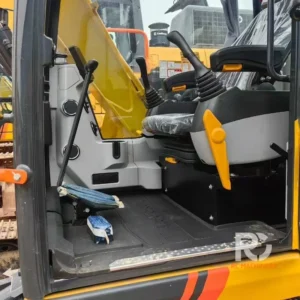
10.1. The Digital Caliper and Thread Gauge
As emphasized throughout this guide, the digital caliper is the most important tool for universal parts sourcing. It allows the technician to measure:
-
Shaft diameters for seals and bearings.
-
Bolt circle diameters for sprockets and rollers.
-
Overall lengths for hoses and cylinders.
Combined with a thread pitch gauge (both metric and imperial), these tools allow the technician to describe a part in universal engineering language that any industrial supplier can understand, regardless of the excavator brand.
10.2. Online Cross-Reference Databases
While the premise of this article is a lack of “dealer coverage,” internet access is often still available. Utilizing third-party cross-reference websites (such as those offered by aftermarket filter manufacturers or undercarriage specialists) allows the technician to input an OEM part number and receive a list of universal alternatives.
For Other machinery in the fleet, these databases are particularly useful because they often reveal that a starter motor for a specific model of wheel loader is the same as the starter motor for a specific model of on-highway truck. By identifying these overlaps, the mechanic can source parts from automotive or truck supply chains, which often have faster logistics than heavy equipment dealerships.
11. The Future of Remote Servicing
The trend toward universal parts is accelerating as telematics and global supply chains evolve. Manufacturers are increasingly using “common architecture” across their model ranges, and even across different brands under the same corporate umbrella. This means that the pool of interchangeable parts is growing.
For the operator of used excavators, this is a net positive. The aftermarket industry is becoming more sophisticated, offering diagnostic software that rivals dealer-level tools. Companies now produce “universal” electronic displays that can interface with the CAN bus (Controller Area Network) of various excavator models, translating data from the engine and hydraulic controllers without requiring a dealer login.
Furthermore, the rise of 3D printing for non-structural components (like plastic trim pieces, cable brackets, and small plastic gears in the cab) is revolutionizing remote repairs. While this does not replace heavy-duty steel components, it allows for the repair of ancillary systems that might otherwise render a machine uncomfortable or non-compliant with safety standards.
12. Conclusion: Self-Sufficiency as a Competitive Advantage
The ability to maintain heavy equipment without reliance on the original manufacturer’s service network is not just a logistical necessity; it is a competitive advantage. In remote regions, downtime is often measured in weeks if the supply chain depends on urban dealerships. By shifting to a strategy based on universal components—dimensional compatibility, standard hydraulic interfaces, and cross-brand supply chains—the fleet manager turns a potential operational crisis into a manageable maintenance evolution.
The key takeaway is that used excavators and supporting Other machinery are ultimately collections of standardized industrial systems. An engine is an engine; a hydraulic pump is a hydraulic pump; a pin is a pin. Once the operator learns to look past the paint and the model number, the world of parts opens up dramatically.
Success in this environment requires a combination of technical skill (the ability to measure and identify), strategic procurement (stocking universal consumables), and a willingness to adapt. It requires a shift from a consumer mindset—”I need a part for my specific machine”—to an engineering mindset—”I need a component with these specific dimensions, tolerances, and material properties.”
In doing so, the remote fleet achieves a level of self-sufficiency that not only keeps the tracks turning and the hydraulics flowing but also significantly lowers the total cost of ownership. The universal part, chosen wisely and installed correctly, does not represent a compromise. It represents the liberation from the constraints of geography and branding, ensuring that the work continues regardless of how far the job site is from the nearest dealer.


