






For contractors and equipment managers operating in mountainous regions or high-altitude job sites, a common frustration emerges when the air gets thin: the machines start to struggle. A once-responsive excavator begins to belch black smoke when the operator demands power, yet the hydraulic power seems to have vanished. The engine sounds labored, acceleration is sluggish, and productivity plummets.
This phenomenon is often described as engine “hypoxia”—a lack of oxygen. While a human might feel short of breath at 3,000 meters above sea level, a diesel engine suffers a mechanical form of suffocation. For those relying on used excavators to keep project margins healthy, understanding this issue is critical. It isn’t a sign that the machine is broken; rather, it is a sign that the engine is reacting to a hostile environment.
This article delves deep into the physics and mechanics of internal combustion at altitude. We will explore why air density matters, how turbochargers compensate (or fail to), and what specific adjustments are required to keep ماكينات أخرى—from wheel loaders to bulldozers—running efficiently in the high country. By the end, you will have a masterclass in diagnosing and mitigating power loss, ensuring your fleet remains profitable regardless of elevation.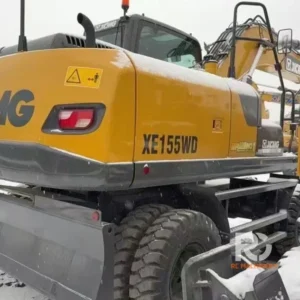
1. The Physics of Air: Understanding Density and Combustion
To understand why an engine suffocates at high altitudes, one must first understand the fundamental role of air in the diesel cycle. Unlike gasoline engines that control power via air throttling, a diesel engine relies on compression ignition. The power output is directly proportional to the amount of fuel that can be efficiently burned, which is dictated by the available oxygen.
1.1 The Composition of Air and Atmospheric Pressure
At sea level, the atmosphere exerts a pressure of approximately 14.7 pounds per square inch (psi). This pressure forces a dense mixture of nitrogen, oxygen, and trace gases into the engine’s intake manifold. Air contains roughly 20.9% oxygen by volume. As altitude increases, atmospheric pressure drops exponentially. At 2,500 meters (approximately 8,200 feet), the atmospheric pressure falls to about 11.1 psi.
The key takeaway here is that the percentage of oxygen remains 20.9%, but the density of the air decreases. Because the air molecules are spread further apart due to lower pressure, the engine’s cylinders receive fewer oxygen molecules per cycle. For every 1,000 meters of elevation gain, the air density decreases by approximately 11%. Consequently, an engine naturally loses about 3% of its rated horsepower for every 300 meters (1,000 feet) of altitude gain if no corrections are made.
1.2 The Diesel Combustion Equation
In a diesel engine, power is controlled by the fuel injection system. The operator demands power by depressing the throttle (or moving the hydraulic pilot control), which signals the engine control module (ECM) or fuel injection pump to send more fuel into the cylinders. For complete combustion, a specific air-to-fuel ratio must be maintained. The stoichiometric ratio for diesel combustion is roughly 14.5:1 by mass, though in practice, diesel engines operate with excess air (lean mixtures) to ensure complete burn and cool combustion temperatures.
When the engine is at high altitude, the mass of air drawn into the cylinder is reduced. However, the fuel injection system—particularly on mechanically injected used excavators—continues to send the same volume of fuel based on the operator’s input. This results in a rich mixture where there is insufficient oxygen to burn all the fuel molecules. This incomplete combustion is the direct cause of the black smoke (soot) and the sensation of “no power.”
2. The Visual Symptom: Black Smoke Analysis
For heavy equipment operators, the exhaust stack is the primary diagnostic tool. The color of the smoke tells a story about what is happening inside the combustion chamber. While white or blue smoke indicates coolant or oil burning, black smoke is unequivocally a sign of incomplete combustion due to an overly rich air-fuel mixture.
2.1 Why Black Smoke Occurs
Black smoke consists of microscopic carbon particles, or soot. Under ideal combustion conditions, the carbon in the diesel fuel combines with oxygen to form carbon dioxide (CO2). However, when the air supply is limited, the carbon atoms are unable to fully oxidize. They instead form solid carbon particles that are expelled through the exhaust system.
At altitude, this is exacerbated by the lag time in the turbocharger response. When an operator quickly demands power—such as when lifting a heavy boulder with an excavator—the fuel is dumped into the cylinders immediately. The turbocharger, which relies on exhaust gas flow to spin up, takes a moment (turbo lag) to compress the thin ambient air to a usable density. During that split second, the mixture is extremely rich, resulting in a dense plume of black smoke.
2.2 Distinguishing Altitude-Related Smoke from Mechanical Failure
It is crucial for owners of ماكينات أخرى to distinguish between altitude-induced black smoke and smoke caused by mechanical defects. A machine operating at sea level that suddenly starts belching black smoke likely has a clogged air filter, faulty injectors, or a failing turbocharger.
However, if the smoke appears only when the machine is taken to a high-altitude site and the engine is under heavy load, it is likely a calibration issue rather than a component failure. Persistent black smoke at high idle, or smoke accompanied by a knocking sound, indicates mechanical issues that require immediate attention. For used excavators with unknown service histories, altitude often exposes pre-existing fuel system weaknesses that were not apparent at lower elevations.
3. The Role of Turbocharging and Forced Induction
Modern heavy machinery, including most used excavators built in the last two decades, utilizes turbochargers to maintain sea-level performance at varying altitudes. A turbocharger is essentially an air pump driven by exhaust gases. It compresses the intake air, increasing its density before it enters the cylinders.
3.1 How Turbochargers Compensate for Altitude
A turbocharger can effectively compensate for altitude to a certain threshold. The compressor wheel draws in the thin air and compresses it, ideally restoring the air density to sea-level conditions within the intake manifold. If the turbocharger is correctly sized and the engine management system is sophisticated, an engine can maintain rated horsepower up to approximately 2,500 meters (8,000 feet).
However, as altitude increases beyond the turbocharger’s design limits, a phenomenon known as “turbo lag” worsens, and the compressor efficiency drops. The turbocharger has to spin faster to achieve the same boost pressure. Because the exhaust gas driving the turbine is also less dense (containing fewer molecules to push the turbine blades), the turbocharger may never reach its target boost pressure under heavy load. This results in a condition known as “turbocharger under-speed,” where the engine is perpetually starved of air.
3.2 Wastegate and Variable Geometry Turbochargers (VGT)
To combat altitude effects, engine manufacturers employ sophisticated turbocharger controls. A wastegate allows exhaust gas to bypass the turbine to prevent over-boosting at sea level. At altitude, the wastegate closes fully to direct all exhaust gas to the turbine to maximize boost.
In ماكينات أخرى, such as high-horsepower wheel loaders and motor graders, Variable Geometry Turbochargers (VGT) are common. VGTs change the angle of the turbine vanes to alter the velocity of the exhaust gas hitting the turbine. At high altitudes, the VGT adjusts the vanes to a closed position to increase exhaust velocity, helping the turbocharger spool up faster and maintain higher boost pressure. If the VGT system is dirty or malfunctioning, the machine will exhibit severe black smoke and power loss at altitude.
4. Fuel Delivery Systems: Mechanical vs. Electronic
The era in which an excavator or piece of ماكينات أخرى was manufactured plays a significant role in how it behaves at high altitude. The transition from mechanical fuel injection to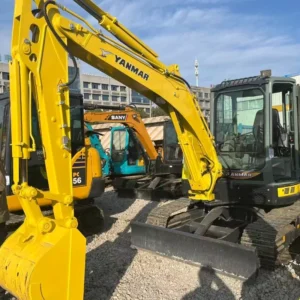 electronic common rail (ECR) systems marked a turning point in altitude compensation.
4.1 Mechanical Injection Systems
Older used excavators equipped with mechanical inline injection pumps or distributor pumps are the most susceptible to altitude sickness. These systems rely on a governor that regulates fuel based on engine speed and throttle position. They do not have direct feedback from oxygen sensors or air density sensors.
When these machines climb to high altitudes, the governor continues to deliver the fuel volume calibrated for sea-level air density. Because the governor does not know that the air is thinner, it over-fuels the engine. The result is a thick cloud of black smoke, high exhaust gas temperatures (EGT), and soot accumulation in the engine oil and exhaust after-treatment systems. Operators often attempt to compensate by backing off the throttle, which defeats the purpose of having a high-power machine on a demanding job site.
4.2 Electronic Common Rail (ECR) Systems
Modern electronic engines represent a massive improvement for high-altitude operation. These systems use sensors—specifically a manifold absolute pressure (MAP) sensor, intake air temperature sensor, and sometimes an ambient air pressure sensor—to calculate the exact mass of air entering the engine.
The engine control module (ECM) then precisely controls the fuel injection timing, duration, and pressure (in common rail systems) to match the available air. If the sensors detect low ambient pressure, the ECM automatically derates the engine. It reduces the maximum fuel delivery to prevent black smoke and protect the engine from excessive cylinder temperatures.
While this derating results in a loss of horsepower (often 1-3% per 300 meters), it ensures that the machine remains responsive and does not clog the diesel particulate filter (DPF) with soot. For fleet managers, purchasing used excavators with Tier 4 Interim or Final emissions standards (which include electronic engine management) is a strategic advantage for high-altitude fleets.
5. Hydraulic Systems: The Unseen Power Drain
Often, the feeling of “no power” in an excavator at high altitude is not solely due to engine horsepower loss. The hydraulic system, which is the primary work mechanism of the machine, also behaves differently in thin air, though indirectly.
5.1 The Hydraulic-Efficiency Feedback Loop
An excavator’s hydraulic system is driven by a variable displacement pump connected to the engine. The pump demands power. If the engine cannot produce enough torque to drive the pump at the demanded flow rate, the engine speed drops (lugging). The engine control system or the hydraulic controller must then reduce the pump’s flow to prevent stalling.
At high altitude, the engine torque curve shifts downward. For every percentage point of power loss in the engine, the hydraulic system’s available flow rate decreases proportionally. This results in slower cycle times, reduced digging force, and a “lazy” feel to the controls. Operators often interpret this as a hydraulic failure, but in reality, it is an engine power deficiency cascading through the hydraulic system.
5.2 Cooling System Efficiency
Cooling is another factor. Air-cooled hydraulic radiators and engine cooling packages rely on air density to transfer heat. At high altitude, the lower air density reduces the cooling capacity of the radiator. The cooling fan, whether mechanically or hydraulically driven, moves fewer air molecules across the cooling fins. Consequently, ماكينات أخرى operating in hot, high-altitude environments often run at higher coolant and hydraulic oil temperatures.
If the engine reaches a critical temperature threshold, the ECM will initiate a protective derate, further reducing power. Therefore, maintaining spotless cooling cores and ensuring fan speeds are adequate is paramount for high-altitude operations. Soot buildup from black smoke can also clog radiator fins externally, compounding the cooling issue.
6. Maintenance Strategies for High-Altitude Operation
Preventive maintenance is the most effective tool for mitigating altitude-related power loss. For owners of used excavators و ماكينات أخرى, a proactive maintenance schedule tailored to high-altitude conditions can restore perceived power and prevent long-term damage.
6.1 Air Filtration: The First Line of Defense
At high altitude, air filters become more critical than ever. Because the air is thinner, the engine ingests a larger volume of air relative to mass to try to compensate. This increases the velocity of air through the intake system and places additional stress on the air filter.
A partially clogged air filter, which might only cause a minor restriction at sea level, can create a significant pressure drop at high altitude. This pressure drop exacerbates the oxygen deficiency. Operators should inspect primary air filters daily and replace them based on restriction gauges, not just on time intervals. Secondary (safety) filters should be replaced every time the primary filter is changed. Using high-efficiency aftermarket filters designed for high dust and altitude conditions is recommended.
6.2 Fuel System Calibration and Quality
Altitude affects fuel quality requirements. At higher elevations, the cetane number of the fuel—which indicates its ignition quality—becomes more critical. Using a high-cetane fuel or adding a cetane booster can improve cold starts and reduce the ignition delay that contributes to black smoke.
For used excavators with mechanical injection systems, a professional calibration of the fuel injection pump to a high-altitude setting is often possible. This involves adjusting the torque control and the fuel delivery curve to reduce the maximum fuel volume at the top end. While this technically derates the machine, it results in a cleaner burn, less smoke, and better operator visibility and comfort.
6.3 Turbocharger and Intake Integrity
Any leaks in the intake system—from the air filter housing to the intake manifold—are catastrophic at high altitude. Because the turbocharger is working harder to build boost, a pre-turbo leak allows unfiltered air to bypass the system, while a post-turbo leak (in the charge air cooler or hoses) results in a loss of boost pressure.
Operators should inspect all rubber boots and clamps on the charge air system daily. Cracks in these components are common on older used excavators due to heat cycling. A simple boost pressure test can determine if the system is holding pressure. Furthermore, the charge air cooler (intercooler) should be inspected for external damage and internal oil accumulation, which reduces its efficiency in cooling the compressed air—denser air is cooler air.
7. Operational Techniques for Operators
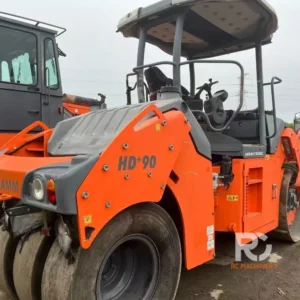 Even with well-maintained machinery, operator technique plays a significant role in managing performance at high altitude. Training operators on the nuances of high-altitude equipment operation can reduce black smoke, save fuel, and prevent premature component failure.
7.1 Managing Hydraulic Demand
At sea level, an operator might habitually “stall” the hydraulics—pushing a bucket against a hard surface while continuing to pull the lever—to maximize breakout force. At high altitude, this practice is detrimental. Stalling the hydraulics places the maximum possible load on the engine, causing the turbocharger to lag and the engine to smoke heavily.
Operators should adopt a technique of “feathering” the controls. Instead of slamming the joysticks to the stops, they should ease into the load. This allows the turbocharger to spool up and build boost before the engine is asked to deliver maximum torque. Modern electronic engines and hydraulic systems are designed for this; abrupt inputs only confuse the control logic and result in inefficient combustion.
7.2 Understanding Engine Derate and Temperature Management
On modern ماكينات أخرى equipped with Tier 4 emissions systems, operators must understand the regeneration process. At high altitude, passive regeneration (where soot is burned off during normal operation) is less effective because exhaust temperatures may be lower due to the reduced oxygen density. Active regeneration, where the ECM injects extra fuel to raise exhaust temperatures, may occur more frequently.
Operators should avoid interrupting regeneration cycles. If the machine is asking for a parked regeneration, it should be performed in a well-ventilated area away from flammable materials. Ignoring these warnings can lead to severe DPF clogging, which results in a complete loss of power and expensive downtime.
8. Long-Term Considerations for Fleet Management
For businesses that rely on heavy equipment in mountainous terrain, the selection and management of the fleet must account for altitude from the outset. The initial purchase of used excavators و ماكينات أخرى should consider the elevation at which they will primarily operate.
8.1 Sizing Equipment for Altitude
When purchasing used excavators, one must consider the “altitude derate” factor. A 20-ton excavator rated for 150 horsepower at sea level may only deliver 125 usable horsepower at 3,000 meters. If the job requires the full capacity of a 20-ton machine at sea level, a larger machine (e.g., a 22-ton or 25-ton) may be required to achieve the same productivity at altitude.
Similarly, when evaluating ماكينات أخرى such as articulated dump trucks or wheel loaders, consider the power-to-weight ratio. A truck that is perfectly balanced at sea level may feel sluggish and struggle on haul roads at high altitude. Consulting the manufacturer’s altitude derate charts before purchasing used equipment is essential.
8.2 Retrofitting and Modifications
For existing fleets, retrofitting certain components can mitigate altitude issues. High-altitude kits are available for many engine models. These typically include:
-
High-altitude fuel settings: Recalibration of the injection pump or ECM software.
-
Different turbocharger trims: A turbocharger with a smaller turbine housing (or different A/R ratio) to improve spool-up in thin air.
-
Larger cooling packages: To compensate for the reduced heat transfer efficiency at altitude.
For used excavators that are older and lack electronic controls, installing a simple fuel pressure regulator to limit maximum fuel flow during high-demand cycles can be a cost-effective way to reduce smoke and prevent engine damage, though it will come at the cost of peak horsepower.
9. Environmental and Regulatory Compliance
In many high-altitude regions, environmental regulations regarding emissions are becoming stricter. Black smoke is not only a sign of inefficiency and a nuisance to the workforce; it is also a regulatory violation in many jurisdictions.
9.1 Emissions Testing at Altitude
Other machinery operating in national parks, ski resorts, or high-altitude urban areas may be subject to opacity tests (smoke tests). A machine that emits visible black smoke for more than a few seconds during a snap-acceleration test can be cited and removed from the site.
Ensuring that used excavators are properly tuned for altitude is not just about performance; it is about compliance. Machines that run rich will also clog DPFs and damage selective catalytic reduction (SCR) systems. Replacing a DPF costs thousands of dollars and results in significant downtime. Thus, proactive altitude tuning is a cost-saving measure.
9.2 The Carbon Footprint Consideration
Incomplete combustion due to altitude hypoxia leads to higher fuel consumption per unit of work. A machine that is black smoking is essentially burning fuel that is not being converted into usable energy. This increases the carbon footprint of the project and reduces the fuel efficiency of the fleet. By optimizing air-fuel ratios through proper maintenance and tuning, contractors can reduce their fuel burn by 5-10% in high-altitude environments, directly impacting the bottom line.
Conclusion
The sight of an excavator straining against a mountainside, belching black smoke while its engine labors, is a common scene in the construction and mining industries. However, it is not an inevitability. The phenomenon of engine “hypoxia”—the suffocation of diesel engines due to thin air—is a well-understood mechanical challenge with clear solutions.
For owners of used excavators و ماكينات أخرى, the journey to high-altitude reliability begins with education. It requires understanding that air is not just “air” but a finite resource measured in oxygen molecules per cylinder. It demands recognizing the limitations of mechanical fuel systems versus the adaptability of electronic ones. It necessitates a rigorous maintenance regime focused on pristine air filtration, boost pressure integrity, and appropriate cooling.
Moreover, it calls for a shift in operational culture. Operators must learn to coax power from their machines rather than demand it abruptly, respecting the lag inherent in turbocharged systems. Fleet managers must factor altitude derates into their equipment selection, opting for machines with sufficient overhead or electronic controls that can manage the thin air without destroying after-treatment systems.
Ultimately, conquering the high-altitude power loss is about preserving the utility of your investment. A machine that runs clean, with minimal black smoke and responsive power, is a machine that is productive, fuel-efficient, and compliant. Whether you are working on a mountain pass at 10,000 feet or a high desert plateau, the principles remain the same: respect the physics of combustion, maintain the equipment meticulously, and tune for the environment. By doing so, you ensure that your fleet—regardless of age or model—delivers the reliability and power required to get the job done, no matter how high the altitude climbs.


