





Hydraulic systems in heavy equipment operate under extreme conditions, and temperature control is one of the most critical factors for reliability. When the hydraulic tank temperature soars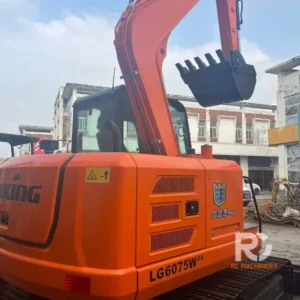 to 85°C, the oil film that protects sliding components—especially valve spools—begins to break down. Without this microscopic layer, metal-to-metal contact occurs, leading to accelerated adhesive wear, scoring, and eventual valve failure. This problem is particularly common in used excavators and other machinery that have accumulated operating hours or lack original cooling efficiency. Understanding the mechanisms behind oil film loss and implementing targeted countermeasures can extend component life significantly. This article provides a structured, technical guide to preventing spool wear under high-temperature conditions, with practical insights applicable to excavator fleets and similar heavy equipment.
2. The Critical Role of Oil Film in Spool Valve Operation
2.1 Hydrodynamic and Boundary Lubrication Regimes
A spool valve operates by sliding within a precision-machined bore. Under normal temperatures (typically 40–60°C), hydraulic oil maintains adequate viscosity to form a hydrodynamic film that separates the two metallic surfaces. As the spool moves, oil is drawn into the gap, creating pressure that supports the load. When temperatures rise, viscosity drops sharply. At 85°C, most mineral-based hydraulic oils exhibit less than half their original viscosity at 40°C. The lubrication regime shifts from hydrodynamic to mixed or even boundary lubrication, where the oil film thickness becomes comparable to surface roughness. In this regime, the protective film is easily ruptured by localized pressure peaks.
2.2 Why 85°C Is the Threshold
Empirical studies and field data from excavator hydraulic systems indicate that 85°C is a tipping point. Above this temperature, oxidation accelerates, additives deplete faster, and the oil’s ability to maintain a continuous film over spool lands and metering edges deteriorates rapidly. For used excavators, previous wear marks and micro-scratches on spools further reduce the effective film thickness, making them more susceptible. Similarly, other machinery such as wheel loaders, bulldozers, and cranes with high-pressure hydraulic circuits share this vulnerability.
3. Root Causes of Temperature Rise to 85°C
Before preventing wear, it is essential to understand why the system reaches such high temperatures. Common contributors include:
-
Inadequate cooling capacity: Radiators and oil coolers clogged with debris, damaged fan blades, or low coolant levels.
-
Continuous high-load cycles: Prolonged digging, lifting, or traveling without idle periods, especially in hot ambient conditions.
-
Low oil level: Insufficient oil volume reduces heat dissipation capacity, causing rapid temperature spikes.
-
Contaminated oil: Water, air entrainment, or solid particles increase internal friction and reduce thermal conductivity.
-
Worn internal components: Bypassing pumps, relief valves stuck partially open, or cylinder leakage generate excessive heat.
-
Improper oil viscosity grade: Using oil that is too thick for the ambient temperature increases shear heating; too thin reduces film strength.
For used excavators, aging hoses with increased flow resistance and sticky control valves often contribute to hidden heat generation. Other machinery like older wheel loaders may have undersized coolers originally designed for lower power densities.
4. Consequences of Oil Film Loss on Spool Integrity
When the oil film fails at elevated temperatures, several wear mechanisms act simultaneously:
-
Adhesive wear (galling): Microscopic welds form between spool and bore, then tear apart, leaving rough surfaces.
-
Abrasive wear: Hard particles (wear debris, oxidized oil residues) become embedded in softer surfaces, cutting grooves.
-
Fatigue wear: Repeated contact stresses cause subsurface cracks and pitting.
-
Corrosive wear: Oxidized acidic oil attacks metal surfaces, accelerating material loss.
The visible results include sluggish spool movement, increased pilot pressure requirements, internal leakage, and poor metering accuracy. In excavator hydraulic systems, this translates to weak digging forces, drifting attachments, and higher fuel consumption. For other machinery with proportional or servo valves, positioning errors and oscillation can occur.
5. Preventive Measures Against Spool Wear at 85°C
A multi-layered approach combining fluid selection, system upgrades, maintenance discipline, and surface engineering provides the most reliable protection.
5.1 Selecting the Right Hydraulic Fluid for High-Temperature Tolerance
Standard ISO VG 46 or 68 oils often fail above 80°C. Alternatives that maintain film strength include:
-
High Viscosity Index (VI) oils: VI > 140 retain viscosity better with temperature. Synthetic or hydrocracked base oils offer VI up to 200.
-
Zinc-based anti-wear (AW) oils: ZDDP additives form a sacrificial chemical film on metal surfaces, effective up to 100°C. However, caution is needed with silver-plated components.
-
Polyalphaolefin (PAO) synthetics: Excellent thermal stability, low volatility, and consistent viscosity up to 120°C. They are ideal for used excavators operating in tropical climates.
-
Polyol ester (POE) biodegradable fluids: Suitable for environmentally sensitive sites, though they require careful compatibility with seals.
When retrofitting other machinery with synthetic oils, flush the system thoroughly to avoid additive incompatibility. Always verify seal materials (Viton or FKM recommended for high-temperature service).
5.2 Upgrading the Cooling System to Stabilize Temperature Below 80°C
The most direct method to prevent oil film loss is keeping tank temperature under 80°C. Strategies include:
-
Increasing oil cooler capacity: Replace the standard cooler with a larger core (e.g., aluminum bar-plate vs. tube-fin). For excavator models with limited space, consider auxiliary coolers mounted in the counterweight area.
-
Electric or hydraulic-driven fan control: Variable-speed fans maintain optimal oil temperature without overcooling. This is especially effective for other machinery with intermittent duty cycles.
-
Thermal bypass valves: Ensure these are working correctly; a stuck bypass sends hot oil directly back to the tank.
-
Adding a pre-cooler for return oil: A small air-to-oil cooler on the pilot circuit reduces heat from continuous pilot flow.
For used excavators, cleaning the existing cooler fins and checking fan belt tension can recover 5–10°C of cooling margin. Always verify that the radiator and oil cooler are not shared in a way that exhaust heat from one preheats the other.
5.3 Optimizing Maintenance Practices to Preserve Oil Film Integrity
Even with proper fluid and cooling, poor maintenance erodes protection. Key actions:
-
Regular oil sampling and analysis: Monitor viscosity, TAN (total acid number), water content, and ISO cleanliness code. Change oil when viscosity drops below the allowable limit (e.g., 15% drop from fresh oil) or TAN exceeds 1.5 mg KOH/g.
-
Controlling contamination: Use breathers with desiccants on the tank. Install 3–5 μm absolute filtration on return lines and 10 μm on pressure lines for excavator systems. For other machinery with servo valves, consider kidney loop filtration.
-
Avoiding overfilling and underfilling: Both cause aeration or cavitation, which generates heat and breaks oil films.
-
Flushing after component failure: If a spool has galled, remove all debris by flushing at high velocity with clean oil before installing new spools.
Used excavators often come with unknown service histories. A full hydraulic oil change, cooler flush, and filter replacement should be the first step before monitoring temperature trends.
5.4 Surface Engineering: Coatings and Treatments for Spools
When operational limits cannot keep temperature below 80°C, hardening the spool surface provides a second line of defense. Effective treatments include:
-
Hard chrome plating: Increases surface hardness (700–1000 HV) and reduces friction. However, micro-cracks may trap oil and cause peeling under thermal cycling.
-
Electroless nickel-phosphorus (ENP): Uniform coating with good corrosion resistance. The amorphous structure has lower friction coefficient than chrome.
-
Physical vapor deposition (PVD) coatings: TiN, CrN, or DLC (diamond-like carbon) can achieve hardness >2000 HV and extremely low friction. DLC is particularly effective for excavator spools operating in boundary lubrication.
-
Nitriding: A diffusion process that creates a hard case (50–70 HRC) on ferrous spools without dimensional change. Gas or plasma nitriding improves scuffing resistance.
For other machinery that runs continuous high-cycle operations (e.g., injection molding machines with hydraulic valves), PVD-coated spools can extend service life fivefold even at 90°C. However, coating costs must be justified by downtime reduction.
5.5 Active Temperature Monitoring and Control Systems
Passive measures are insufficient if the operator has no real-time data. Install:
-
Digital temperature sensors with alarms set at 75°C (caution) and 80°C (shutdown). Thermocouple probes inserted into the tank or inline.
-
Flow and temperature display in the cab. Many modern excavator monitoring systems have this, but used excavators may need aftermarket add-ons.
-
Automatic shutdown logic: The engine controller reduces load or idles down when 85°C is approached. This prevents continued operation under oil film failure conditions.
For other machinery without factory telematics, a simple panel meter with a thermocouple and relay can trigger an audible alarm and flashing light.
6. Specific Considerations for Used Excavators
Used excavators present unique challenges because their hydraulic components have existing wear patterns. The original clearances between spool and bore may have increased from 0.01 mm to 0.03 mm or more due to prior use. Larger clearances require even thicker oil films to maintain sealing and lubrication. When temperature rises to 85°C, the already-thinned oil cannot bridge these gaps. Consequently, internal leakage rises sharply, generating more heat in a vicious cycle.
Preventive steps tailored to used excavators:
-
Measure spool-to-bore clearance during valve servicing. If clearance exceeds manufacturer limits (typically 0.05 mm for medium-sized valves), consider re-sleeving or replacing the valve section.
-
Use high-viscosity oil (ISO VG 100) if ambient temperatures are moderate (above 10°C). This compensates for both temperature-induced thinning and larger clearances.
-
Install inline oil coolers with bypass filters to remove sludge that accumulates in older systems. Sludge traps heat and accelerates oxidation.
-
Inspect pilot oil circuits – many used excavators have neglected pilot filters. A partially blocked pilot filter causes slow spool response, forcing operators to increase pilot pressure, which in turn increases spool side loads and film rupture risk.
7. Cross-Application Lessons for Other Machinery
The principles discussed apply broadly to other machinery with hydraulic spool valves. Examples include:
-
Agricultural tractors with hydraulic remotes – frequent high-flow operations during harvest season raise temperatures.
-
Forklifts with proportional valves – continuous lifting cycles generate heat, and spool wear leads to load drifting.
-
Industrial presses – oil temperature can reach 85°C after hours of cycling; valve spools in these machines often suffer from boundary lubrication wear.
-
Skid steer loaders – compact designs limit cooler size, making them prone to overheating during heavy digging.
For other machinery, the same five preventive pillars apply: fluid selection, cooling upgrades, maintenance, coatings, and monitoring. However, one additional factor is duty cycle. Intermittent machinery (like a forklift used sporadically) may tolerate higher peak temperatures because the oil has time to cool between cycles. Continuous-duty machinery (like a conveyor system hydraulic power unit) needs stricter control. Always calculate the thermal equilibrium – if the cooling system cannot reject the total heat generated, no amount of oil film additives will prevent eventual spool wear.
8. Step-by-Step Troubleshooting When Tank Temperature Hits 85°C
If your used excavator or other machinery already shows 85°C on the gauge, take immediate action: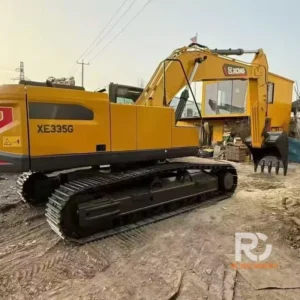
-
Reduce load – lower engine RPM, actuate fewer functions simultaneously, or switch to idle. This lowers heat generation.
-
Check oil level – add oil if low. Low level accelerates aeration and reduces cooling.
-
Inspect cooler – feel the core for cold spots (blocked passages). Clean external fins with compressed air or low-pressure water.
-
Measure temperature differential across the oil cooler (inlet vs. outlet). A differential less than 8–10°C indicates poor heat transfer.
-
Examine fan belt and fan clutch – on engine-driven fans, slipping belts or failed viscous clutches are common in used excavators.
-
Take an oil sample – send for analysis. Elevated iron and copper indicate active spool/bore wear.
-
If no immediate solution exists, schedule a shutdown to upgrade cooling or change to a higher-viscosity synthetic oil.
Do not ignore the problem. Running an excavator at 85°C for even 20 hours can cause irreversible spool damage that requires valve bank replacement – a costly repair.
9. Long-Term Design and Retrofitting Recommendations
For fleet owners and maintenance managers, investing in permanent solutions reduces recurrent spool wear. Consider:
-
Retrofitting a hydraulic oil cooler bypass thermostat set to 70°C. This keeps oil from overcooling in winter and rapidly reaching film-damaging temperatures in summer.
-
Adding a coolant-oil heat exchanger (plate-type) for machines with engine coolant systems. This stabilizes oil temperature near the engine coolant temperature (typically 85–95°C if not separately cooled – not ideal). Better to use an air-cooled exchanger.
-
Switching to a centralized lubrication system for spool valves – some aftermarket systems inject a small amount of high-viscosity grease into the spool bore intermittently. This is unconventional for hydraulic systems but has been tried on other machinery with low-cycle applications.
-
Using spool position sensors and closed-loop control – by reducing overshoot and hunting, closed-loop controllers minimize unnecessary spool movement, which reduces friction heating and oil film disruption.
For used excavators that will be operated for another 5,000 hours, the return on investment for a new oil cooler and synthetic oil is typically under 200 hours of avoided downtime.
10. Conclusion
Maintaining an intact oil film on valve spools at hydraulic tank temperatures of 85°C is achievable through deliberate system design and operational discipline. The core strategies – upgrading to high-VI or synthetic fluids, increasing cooling capacity, enforcing contamination control, applying hard coatings, and installing active temperature monitoring – work synergistically. Used excavators demand extra attention to clearances and existing wear, while other machinery benefits from duty-cycle-specific adjustments. Ignoring the 85°C threshold leads to rapid spool deterioration, costing far more in repairs and lost productivity than proactive measures.
Every maintenance program for excavator and similar hydraulic systems should include a thermal audit: measure temperatures at the tank, cooler inlet/outlet, and valve drain lines. If any temperature exceeds 80°C under normal working conditions, implement the solutions described above before oil film loss triggers catastrophic wear. By respecting the physics of lubricating films, you ensure that your hydraulic spools continue to operate smoothly, precisely, and reliably – even when the gauge reads 85°C.