





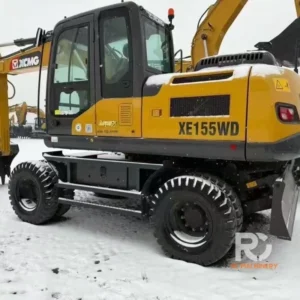
 Thermal management is one of the most critical yet often overlooked aspects of heavy equipment design. For any diesel-powered machine operating in demanding environments, excessive heat is the enemy of reliability, efficiency, and service life. Excavators, in particular, generate immense thermal loads from three primary sources: the engine, the hydraulic system, and the cabin air conditioning. When these heat loads are not properly dissipated, performance degrades, component wear accelerates, and unexpected downtime becomes inevitable. This is especially true for used excavators, where original cooling efficiency may have already declined due to age, clogged cores, or improper maintenance.
Understanding how an excavator’s cooling system works—and more importantly, how its three core heat exchangers (radiator, hydraulic oil cooler, and AC condenser) are arranged—can help equipment owners, operators, and service technicians maximize uptime and avoid costly repairs. The layout of these components is not arbitrary; it reflects decades of engineering refinement aimed at balancing airflow, space constraints, heat transfer efficiency, and serviceability. Moreover, the same fundamental principles apply to other machinery such as wheel loaders, bulldozers, and motor graders, though each machine type has unique adaptations.
In this comprehensive guide, we will dissect the anatomy of an excavator’s cooling package. We will explore how each heat exchanger functions, how they are physically arranged within the engine compartment, and why certain layouts dominate modern designs. We will also discuss airflow dynamics, maintenance best practices for used excavators, and common failure modes. By the end, you will have a clear picture of the secrets behind efficient heat dissipation in heavy equipment.
2. Fundamentals of Heat Generation in an Excavator
Before diving into the layout of cooling components, it is essential to understand where the heat comes from. An excavator is a self-contained system that converts chemical energy (diesel fuel) into mechanical and hydraulic energy, with a significant portion ending up as waste heat.
2.1 Engine Heat
The diesel engine is the primary heat source. During combustion, cylinder temperatures can exceed 2000°C (3632°F). While much of this energy is converted to crankshaft rotation, approximately 30–35% is rejected to the engine coolant (water-glycol mixture) and another 30–35% exits through the exhaust. The remaining energy powers the hydraulic pumps and accessories. The engine cooling system must maintain a stable operating temperature (typically 85–95°C / 185–203°F) to prevent overheating, oil breakdown, and head gasket failure.
2.2 Hydraulic System Heat
Excavators rely on high-pressure hydraulics for every movement: boom, arm, bucket, swing, and travel. Hydraulic oil circulates through pumps, valves, cylinders, and motors, generating significant frictional and pressure-drop heat. In normal operation, hydraulic oil temperature should remain between 50–80°C (122–176°F). Without a dedicated hydraulic oil cooler, temperatures can quickly exceed 100°C, causing seal damage, viscosity loss, and accelerated pump wear. The hydraulic oil cooler is therefore just as vital as the engine radiator, especially in used excavators where piston clearances and valve tolerances have increased.
2.3 Air Conditioning Heat
The cabin AC system removes heat and humidity from the operator’s environment. The condenser, located in the engine compartment, releases the heat absorbed from the cabin into the outside air. Although the thermal load from the AC is smaller than that of the engine or hydraulics, the condenser still adds to the overall heat rejection burden. In hot climates, the AC condenser can raise the air temperature entering the radiator by 10–15°C, affecting overall cooling performance.
2.4 Why Cooling Layout Matters
The challenge is that all three heat exchangers must fit into a confined engine bay, often with limited frontal area for airflow. Their relative positions determine which component receives the coolest incoming air first and which one must deal with pre-heated air. Poor layout can lead to cascading overheating: the AC condenser heats the air, which then passes through the hydraulic oil cooler, further heating it before it reaches the radiator. This is why engineers carefully sequence the heat exchangers in the cooling stack. Understanding these design secrets is essential for anyone maintaining other machinery with similar multi-cooler configurations.
3. The Three Core Components: Function and Design
To appreciate the layout, we must first examine each heat exchanger individually.
3.1 Engine Radiator
The radiator is a liquid-to-air heat exchanger. Engine coolant circulates through the engine block and cylinder head, absorbing heat, then flows to the radiator where it is cooled by ambient air. Modern excavator radiators use cross-flow or down-flow designs with aluminum cores and plastic tanks, though some heavy-duty models still employ copper-brass for superior corrosion resistance. The core consists of flat tubes and serpentine fins that maximize surface area while minimizing air resistance.
Key parameters: fin density (fins per inch), tube size, and number of rows. A higher fin density increases heat transfer but restricts airflow and clogs more easily—a critical consideration for used excavators operating in dusty environments.
3.2 Hydraulic Oil Cooler
The hydraulic oil cooler is typically an air-to-oil heat exchanger. It can be of the tube-fin type (similar to a radiator) or a plate-bar design where oil flows through stacked plates while air passes between them. Plate-bar coolers are more compact and efficient but harder to clean. The oil cooler is often placed downstream of the radiator or upstream, depending on the layout philosophy. Its sizing is based on the hydraulic system’s maximum heat rejection, which can be 30–50% of engine power for an excavator.
3.3 AC Condenser
The AC condenser is a refrigerant-to-air heat exchanger. High-pressure, high-temperature refrigerant gas from the compressor enters the condenser, releases heat, and condenses into a liquid. The condenser is almost always a tube-and-fin design with aluminum construction. It is typically the thinnest of the three coolers and has the lowest airflow resistance. Because the condenser operates at much higher internal pressures (up to 25 bar / 360 psi), its tubes must be robust, and leaks often occur at tube-to-header joints in older used excavators.
3.4 Additional Coolers (Optional)
Some other machinery and high-spec excavators may include additional coolers: a charge air cooler (aftercooler) for turbocharged engines, a fuel cooler, or a swing motor cooler. However, the core trio—radiator, hydraulic oil cooler, AC condenser—is universal.
4. Layout Secrets: How These Components Are Arranged
Now we reach the heart of the topic. The physical arrangement of the three heat exchangers directly determines cooling performance, serviceability, and resistance to clogging. There is no single “best” layout; instead, manufacturers choose configurations based on the excavator’s size, engine placement, fan type, and target operating environment.
4.1 Typical Configurations
4.1.1 In-line Stack (Tandem) Layout
In this classic arrangement, the three coolers are stacked one behind another in a single row, aligned with the fan airflow. The AC condenser is usually placed at the very front (facing the grille), followed by the hydraulic oil cooler, then the radiator closest to the fan. Why this order? The condenser requires the coolest air to maximize refrigerant condensation, but it is also the thinnest and most tolerant of slight temperature rise. The hydraulic oil cooler comes second because oil can tolerate moderately higher inlet air temperatures without performance loss. The radiator, being the largest and most critical, receives air that has already been warmed by the first two coolers—a compromise that engineers accept because the engine coolant has a higher specific heat capacity and can still reject heat effectively. This stack is common on mid-sized used excavators from Japanese and Korean brands.
4.1.2 Side-by-Side (Parallel) Layout
Here, the coolers are arranged vertically or horizontally adjacent to each other, each receiving its own dedicated portion of the fan’s airflow. For example, the radiator may occupy the lower half of the cooling package, with the hydraulic oil cooler and AC condenser sharing the upper half. This layout avoids pre-heating of air from one cooler to another. However, it requires a larger frontal area and more complex ducting. It is often seen on large mining excavators and some other machinery like wheel loaders where the engine bay is wide enough.
4.1.3 Offset or Stacked with Bypass
A hybrid approach places the AC condenser and hydraulic oil cooler in a partial stack while allowing some fresh air to bypass them and directly hit the radiator. Bypass ducts or perforated plates are used. This reduces the temperature rise before the radiator but sacrifices some cooling of the auxiliary coolers. It is a compromise for excavators that frequently operate at high engine loads (high radiator heat) but low hydraulic loads (little need for oil cooling).
4.1.4 Separate Mounting (Remote Coolers)
On very large or specialized excavators, the hydraulic oil cooler or AC condenser may be mounted remotely—on the counterweight, on the cab roof, or even on the boom. This eliminates pre-heating entirely but adds hydraulic line length and mounting complexity. For used excavators that have been modified, remote coolers are sometimes retrofitted to solve chronic overheating.
4.2 Airflow Dynamics and Fan Design
The fan is the engine that drives air through the cooling stack. Most excavators use a suction fan (puller) mounted behind the radiator, drawing air from the grille through all coolers and discharging it into the engine compartment. A pusher fan (in front) is rare because it would blow hot air onto the engine and accumulate debris on the fan itself.
4.2.1 Fan Shroud and Ducting
A fan shroud ensures that air is drawn evenly across the entire face of the coolers, not just the center. Without a proper shroud, air recirculation occurs: hot air from the engine compartment is sucked back into the fan inlet, dramatically reducing cooling efficiency. In used excavators, damaged or missing shrouds are a common cause of overheating that is often overlooked.
4.2.2 Fan Speed and Pitch
Fixed-speed fans are driven directly by the engine crankshaft, so fan speed is proportional to engine RPM. This works poorly at low idle (insufficient cooling) and wastes power at high RPM. Modern excavators use variable-speed hydraulic fans or viscous clutch fans that adjust speed based on coolant temperature. The layout of the cooling stack must accommodate the fan’s swept area; any obstruction in front of the fan (e.g., a misaligned cooler) creates dead zones.
4.2.3 Impact of Clogging
Debris—leaves, dust, mud, seeds—accumulates on the finned surfaces, starting with the first cooler in the stack (usually the AC condenser). As the condenser clogs, airflow to downstream coolers diminishes. In dusty job sites, used excavators can lose 30–50% of cooling capacity within a few weeks if not cleaned daily. This is why some layouts place the radiator first (easier to clean) but then the AC condenser would get pre-heated air, reducing its efficiency. There is no perfect solution; only regular cleaning.
4.3 Space Constraints and Serviceability
Excavator engine compartments are notoriously tight. The cooling stack must fit between the engine and the counterweight or side door. Service access for cleaning and repair is a major design driver.
4.3.1 Swing-Out or Tilt-Out Coolers
Many modern excavators feature a cooling package that swings or tilts outward on hinges, allowing full access to the fan, belts, and the backside of the radiator. This is especially valuable for used excavators that require frequent cleaning. The layout of hoses and pipes must accommodate this movement; rigid lines are replaced with flexible hoses at the hinge points.
4.3.2 Individual Cooler Removability
In the stack layout, removing the radiator may require first removing the AC condenser and hydraulic oil cooler. This is a major labor cost. In contrast, side-by-side layouts allow each cooler to be extracted independently. When evaluating other machinery, serviceability is a key differentiator: for example, a wheel loader’s cooling package often slides out as a single module, while an excavator’s is more integrated.
4.3.3 Drain Valves and Fittings
The layout also determines where drain valves for coolant and hydraulic oil are placed. Poorly located drains make fluid changes messy and incomplete, leading to contamination and reduced heat transfer in used excavators.
4.4 Differences Between Excavator Models and Other Machinery
While the principles are similar, different machine types impose unique constraints.
-
Mini excavators (under 5 tons): Extremely tight spaces often force a single-row stack with the condenser at the front. Fan diameter is small, so fan speed is high (noisy). Some mini excavators omit the hydraulic oil cooler and rely on the tank surface area, but that is insufficient for heavy use.
-
Mid-size excavators (10–30 tons): The most common category. Most use the in-line stack with a suction fan. A few premium models place the hydraulic oil cooler above the radiator (side-by-side) for better cooling when digging.
-
Large excavators (over 50 tons): Often have two separate cooling circuits: one for the engine and one for the hydraulics, with two fans or a split cooling package. The AC condenser is sometimes relocated to the cab roof.
-
Other machinery comparison: Wheel loaders typically have the radiator and hydraulic oil cooler side-by-side because the engine bay is wider and shorter. Bulldozers place the cooling stack at the rear but have a pusher fan due to the rear grille design, which is less efficient but necessary for debris shedding. Motor graders have a tilted cooling package to reduce clogging from blade dust. Each layout reflects the machine’s specific operating environment.
Understanding these differences helps when buying used excavators or other machinery—a cooling layout that works well in a quarry may fail in a forestry application.
5. Thermal Interaction and Cooling System Integration
The cooling stack does not operate in isolation. It interacts with the engine’s thermostat, hydraulic oil thermostat (if present), and the AC system’s high-pressure switch. We must examine how heat is rejected in series versus parallel circuits.
5.1 Series vs. Parallel Cooling Circuits
In a series cooling circuit, the engine coolant passes through the radiator, then through the hydraulic oil cooler (if it is a liquid-to-liquid type), then back to the engine. This is rare in excavators because it forces the hydraulic oil to run at coolant temperature (too hot). Most excavators use independent air-to-oil and air-to-water circuits, but they share the same airstream. That is a series air path, parallel fluid paths.
The critical factor is the temperature rise across each cooler. For example:
-
Ambient air: 30°C
-
After AC condenser: +5°C → 35°C
-
After hydraulic oil cooler: +8°C → 43°C
-
After radiator: +12°C → 55°C (air exiting the fan)
The radiator sees inlet air at 43°C, which is 13°C above ambient. To compensate, the radiator must have 20–30% more surface area than if it were first in the stack. This is the hidden cost of the stack layout.
5.2 The Role of the Cooling Module (Cooling Package)
Manufacturers increasingly pre-assemble the three coolers into a single modular cooling package, including the fan shroud, mounting brackets, and sometimes the fan itself. This module is then installed into the excavator as a unit. Benefits: tighter tolerances, fewer air leaks between coolers, and faster assembly. For used excavators, a modular package can be replaced entirely if the radiator core is damaged, rather than rebuilding individual coolers.
However, modular designs can hide corrosion between coolers. Because the coolers are clamped tightly together, moisture and salt can accumulate in the gap, eating away at the fins. This is a common problem in coastal or cold-climate used excavators.
5.3 Impact of Clogging and Debris on Heat Dissipation
Clogging is not uniform. The first cooler (AC condenser) catches large debris—insects, leaves, paper—while the second cooler (hydraulic) catches finer dust that passes through the first. The radiator, being last, receives the finest particles, which can lodge deep in the fin pack and are difficult to remove with compressed air alone.
A study of used excavators in construction sites showed that after 500 hours without cleaning, radiator airflow dropped by 40%, leading to a 15°C rise in coolant temperature. The AC condenser was 80% blocked, causing the compressor to cycle off frequently. Regular cleaning with low-pressure water or compressed air from the backside (reverse flow) is essential. Some layouts include a reversible fan that momentarily reverses airflow to blow out debris—a feature highly recommended for dusty applications.
6. Enhancing Cooling Efficiency: Design Innovations
Engineers continuously improve cooling layouts. Here are some advanced concepts found in modern excavators and gradually appearing in other machinery.
6.1 Variable Speed Fan Drives
A fixed fan runs at engine speed, but the cooling demand varies. At low engine RPM (idle), the fan may not provide enough airflow; at high RPM (digging), it may overspeed, wasting fuel and creating noise. Variable-speed hydraulic fans, controlled by a temperature sensor, run only as fast as needed. This reduces fuel consumption by 3–5% and allows the cooling stack layout to be optimized for average rather than peak airflow. The fan motor must be positioned to allow even airflow across the stack, which often means centering it behind the radiator with a carefully designed shroud.
6.2 High-Efficiency Core Materials
Aluminum has largely replaced copper-brass because it is lighter and less expensive, but copper-brass has better thermal conductivity and corrosion resistance. Some premium excavators use aluminum cores with enhanced fin geometries (louvered fins, offset strip fins) that increase turbulence and heat transfer by 20–30% without increasing pressure drop. This allows the stacking order to be rearranged—for example, placing the radiator first without sacrificing AC condenser performance. However, these high-density fin cores clog faster, so they are best suited for clean environments.
6.3 Hydraulic Driven Fans
Instead of a mechanical belt or direct drive, some large excavators use a hydraulic motor to spin the fan. This decouples fan speed from engine RPM completely, allowing the fan to run at full speed even at low idle—ideal for stationary operation with high hydraulic load. The hydraulic fan can also be reversed on demand to blow debris off the coolers. The layout implication: the hydraulic fan motor and its hoses take up space behind the radiator, which may push the cooling stack forward, reducing the engine bay depth. Manufacturers must balance this against service access.
6.4 Dual-Pass versus Single-Pass Flow
Within each cooler, the fluid path can be single-pass (flows straight through) or multi-pass (turns back and forth). Multi-pass increases fluid velocity and heat transfer but also increases pressure drop. For the hydraulic oil cooler, multi-pass is often chosen because hydraulic oil is viscous and benefits from higher turbulence. However, multi-pass coolers are thicker, affecting stack depth. In used excavators, a multi-pass cooler that is partially blocked internally (by sludge) will have a much higher pressure drop, reducing oil flow and causing overheating.
7. Maintenance Practices for Optimal Cooling in Used Excavators and Other Machinery
Proper maintenance is the single most important factor in preserving cooling performance, especially for used excavators that may have unknown service histories. The following practices should be part of any owner’s regimen.
7.1 Daily External Cleaning
Before each shift, inspect the cooling package grille and the visible fins of the first cooler (usually the AC condenser). Use compressed air (maximum 30 psi / 2 bar) blown from the fan side outward (reverse direction) to dislodge debris. If compressed air is not available, a garden hose with low pressure can be used, but be careful not to bend fins. For other machinery with different layouts (e.g., push fans on bulldozers), the cleaning direction must be reversed.
7.2 Weekly Internal Cleaning (If Accessible)
If the cooling package swings out or tilts, open it weekly and clean between the coolers. Debris often accumulates in the gap between the AC condenser and hydraulic oil cooler. Use a soft brush or air lance. Do not use a pressure washer; high pressure will bend fins and may rupture tubes.
7.3 Coolant and Hydraulic Oil Quality
Old coolant becomes acidic and can corrode the radiator tubes from the inside. For used excavators, test the coolant’s pH and freeze point every 500 hours. Change it every 2000 hours or as specified. Similarly, hydraulic oil that has degraded (high TAN number) forms varnish that coats the inside of the oil cooler, reducing heat transfer by 30% or more. Regular oil sampling is essential.
7.4 Fan Belt and Bearing Checks
A loose fan belt on belt-driven fans reduces fan speed and airflow. Check belt tension every 250 hours. On hydraulic fan systems, check for leaks at the motor shaft seal; a small leak will eventually starve the fan of oil. Listen for unusual noises—grinding may indicate a failing fan bearing.
7.5 Thermostat and Fan Clutch Inspection
A stuck-open thermostat causes the engine to run too cool, which is bad for combustion efficiency and oil viscosity. A stuck-closed thermostat causes overheating. Test the thermostat in hot water. For viscous fan clutches, check that the fan engages when the radiator outlet air is hot (around 80°C). Many used excavators have failed fan clutches that go unnoticed until a hot day.
7.6 Pressure Testing for Leaks
Leaks in the cooling system allow air to be sucked in, causing localized boiling and loss of coolant. Pressure test the radiator and hydraulic oil cooler annually. Small leaks in the AC condenser are harder to find but will eventually deplete refrigerant, causing the AC to cycle off and reducing airflow through the condenser (since a non-functioning condenser still obstructs air but does not transfer heat). The AC system should be serviced by a qualified technician.
7.7 When to Replace Coolers
No amount of cleaning can restore a cooler that has internally corroded or fin-damaged beyond repair. Signs that a cooler needs replacement:
-
Radiator: Coolant loss without external leaks (internal crack), or multiple tube patches.
-
Hydraulic oil cooler: Oil in coolant (if it’s a liquid-to-liquid type) or excessive temperature difference across the cooler with clean fins.
-
AC condenser: Visible fin rot, or repeated refrigerant leaks at different locations.
For used excavators nearing the end of their service life, replacing the entire cooling package may be more cost-effective than chasing individual failures.
8. Signs of Cooling System Problems and Troubleshooting
Even with good maintenance, problems arise. Recognizing early warning signs can prevent catastrophic engine or hydraulic failure.
8.1 High Coolant Temperature Alarm
The most obvious sign. But before panicking, note the operating conditions: Are you working on a slope? (Reduced coolant circulation due to low pump inlet pressure.) Is the ambient temperature extremely high? Is the hydraulic system under heavy load (e.g., deep trenching)? Check these first.
8.2 Elevated Hydraulic Oil Temperature
Most excavators have a separate hydraulic oil temperature gauge. If the oil exceeds 90°C (194°F) during normal operation, suspect a clogged hydraulic oil cooler or a worn relief valve generating excess heat. On used excavators, internal hydraulic leaks (e.g., bypassing cylinder pistons) produce heat without doing useful work.
8.3 Poor AC Performance with Normal Coolant Temps
If the AC blows warm but the engine is not overheating, the condenser may be externally clogged or the condenser fan (if separately driven) may be dead. Also check that the AC condenser’s front side is not blocked by an aftermarket grille or debris.
8.4 Temperature Differences Across Coolers
Use an infrared thermometer. Compare the inlet and outlet temperatures:
-
Radiator: Inlet (top hose) should be 15–25°C hotter than outlet (bottom hose).
-
Hydraulic oil cooler: Inlet and outlet should differ by 10–20°C.
-
AC condenser: The liquid line after the condenser should be significantly cooler than the discharge gas line from the compressor (often 30–40°C difference).
If the temperature difference is very low, the cooler may be bypassed internally (failed thermostat) or the fluid is not flowing.
8.5 Visual Inspection of Fins
Look through the grille. If you cannot see light through the cooler cores, they are clogged. Also check for bent fins (common from pressure washer damage). Straighten bent fins with a fin comb.
8.6 Fan Speed Check
With the engine at operating temperature, observe the fan. A mechanical fan should spin at roughly the same RPM as the water pump pulley (check with a strobe light). A hydraulic fan should speed up audibly as temperatures rise. A viscous clutch fan should feel stiff when hot and spin freely when cold.
9. Conclusion: The Future of Excavator Cooling Systems
The layout of the radiator, hydraulic oil cooler, and AC condenser in an excavator is a masterclass in thermal engineering under spatial constraints. From the classic in-line stack to side-by-side and remote mounting, each configuration balances competing demands: maximum heat rejection, minimal pre-heating, easy service access, and resistance to clogging. For owners and operators of used excavators and other machinery, understanding these layout secrets is not an academic exercise—it directly translates to lower repair costs, higher machine availability, and longer component life.
As emissions regulations tighten and hybrid powertrains emerge, excavator cooling systems will evolve further. Electric excavators, for example, still require cooling for inverters and batteries, but the waste heat is lower and more distributed. Some manufacturers are experimenting with stacked coolers that incorporate phase-change materials or even thermoelectric generators to recover waste heat. However, the fundamental challenge remains: how to move enough air through three densely packed heat exchangers without overheating any single component. The answer, as always, lies in the layout.
Whether you are inspecting a potential purchase of a used excavator, troubleshooting an overheating problem, or simply curious about the black art of heavy equipment cooling, remember that the first thing to check is the cooling stack order. Look at which cooler faces the grille. Note how the fan shroud fits. Feel the temperature gradient across the cores. These physical clues will tell you more than any diagnostic computer.
In the end, heat dissipation in an excavator is a team effort. The radiator, hydraulic oil cooler, and AC condenser must work in harmony. Their arrangement is the conductor’s score. And like any orchestra, when the layout is right, the machine runs cool and quiet; when it is wrong, the only music is the sound of alarms.